TECH FOR Techs
REBECCA HITCHON gets the scoop on high-tech launches, decodes hot topics & sources tech-savvy tips for your business
How to make your social media more accessible
Last month, I explored ways to ensure your website can be easily accessed, navigated and understood by people with additional needs or disabilities. Now, I’m shifting the focus to social media content. There are many aspects that you can easily adapt for accessibility, as the UK Government Communications website (communications.gov.uk) explains. Here is some of its advice:
Clear captions
• Avoid big blocks of text and keep sentences to a maximum of 25 words.
• Two hashtags per post are recommended and only at the end of a post, as is using capital letters at the start of each hashtag word.
• Emojis should not ‘communicate a core message’, be used too much or repeated.
• Ensure that calls to action are clear for screen reader users. For example, ‘click here’ isn’t specific about where a link leads.
• For visually impaired users, describe important image information using alternative text features. “Keep the alt text description short and specific,” says Government guidance. “Imagine how you would explain the information in a picture over the phone.”
Accessible appearance
• Keep contrast high between components. Contrast checkers like www.webaim.org/resources/contrastchecker recommend a minimum contrast ratio of 4:5:1.
• Avoid a large colour palette, as well as gradients – which can be confusing and distracting.
• Keep text to a minimum in graphics and do not use small fonts.
• Videos should ideally include a voiceover, subtitles and closed captions (on-screen text providing contextual information, such as non-verbal audio cues). There should be at least 20db difference between music and voiceovers.
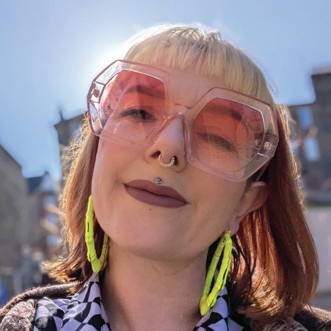
Zara Evry
Salon spotlight
“Accessibility isn’t about ticking boxes; it’s about creating a space where more people feel seen, understood and welcome,” shares Zara Evry, owner of Cute But Deadly Nail Co., which has salons in Edinburgh and Bathgate.
“If people can’t easily understand your content, find the information they need or see themselves represented, they may never make it as far as booking.
“I don’t think we consciously decided to make our social media platforms accessible; we simply created the kind of content we would want to consume ourselves,” Zara continues. “I have a busy brain and process information better when it contains bold colours, large text and is clearly laid out. I realised that by creating content that works for me, it becomes more accessible to others, as many of our clients are neurodivergent or have busy minds.”
Cute But Deadly salons house self-employed nail artists and beauty therapists, and the business’ main Instagram page is a collaborative space featuring their content. So how does Zara ensure accessibility across this? “We encourage each artist to show up as themselves, because I believe the more relatable you are, the more accessible you become,” she says.
Top tips
“Adding subtitles, using easy-to-read fonts, keeping information organised and avoiding huge blocks of text makes a massive difference,” shares Zara. “Most importantly, be yourself. When you communicate in a way that feels authentic to you, you naturally attract people who connect with your personality, communication style and business.”
@cutebutdeadlynailco
@cutebutdeadlynailco
/cutebutdeadly