Which Bit?
Elevate your E-file knowledge & ensure you choose the right bit for each aspect of a nail service with Scratch’s handy guide
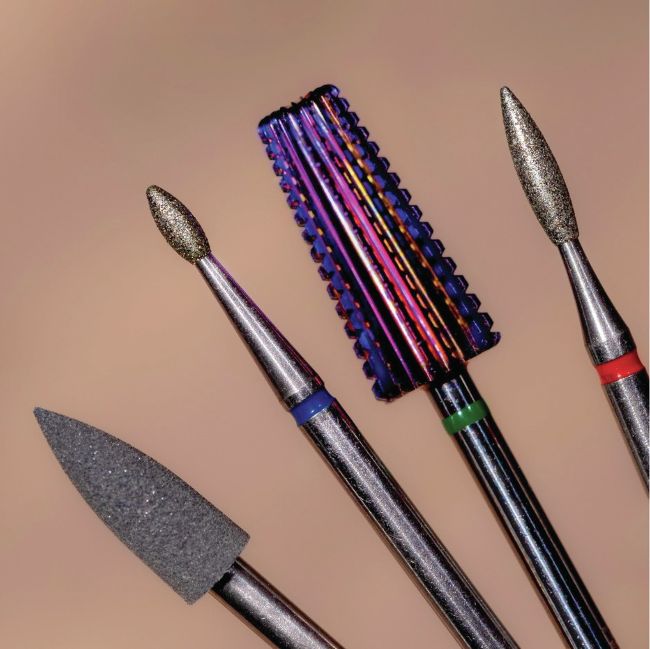
Image courtesy of Willow, www.willowacademy.com
Different E-file bits are designed for different purposes, products and areas of the nail. Choosing the wrong E-file bit for the task you are carrying out has consequences: most notably for your clients’ natural nails and skin. What’s more, not only will the treatment take longer, but the bit may wear out faster than intended.
“I always encourage students to ask themselves: ‘What am I trying to achieve?’ before reaching for an E-file bit,” says CND™ educator, Jodie Cunningham. “Are you removing bulk, refining product, working around the cuticle area or finishing the surface? The answer helps determine the bit material, shape and grit needed. I
Jodie Cunningham don’t believe you need hundreds of E-file bits; it’s much better to confidently use a small selection because you understand exactly what each one does.”
A spokesperson for nail tool and education brand, Willow, adds: “Understanding E-file bits is just as important as choosing the correct E-file. Investing time in learning what each bit is designed for, how to use it and when to replace it not only improves your technique, but elevates the quality and safety of your services. For example, a bit that is too coarse for a particular task will cause unnecessary damage to the nail plate, whereas a bit that is too fine may result in you spending more time filing an area, potentially creating friction and heat spikes.”
FACT FILE
E-file bits display different coloured bands to showcase their coarseness:
• Yellow = fine.
• Red = fine/medium.
• Blue = medium.
• Green/black = coarse.
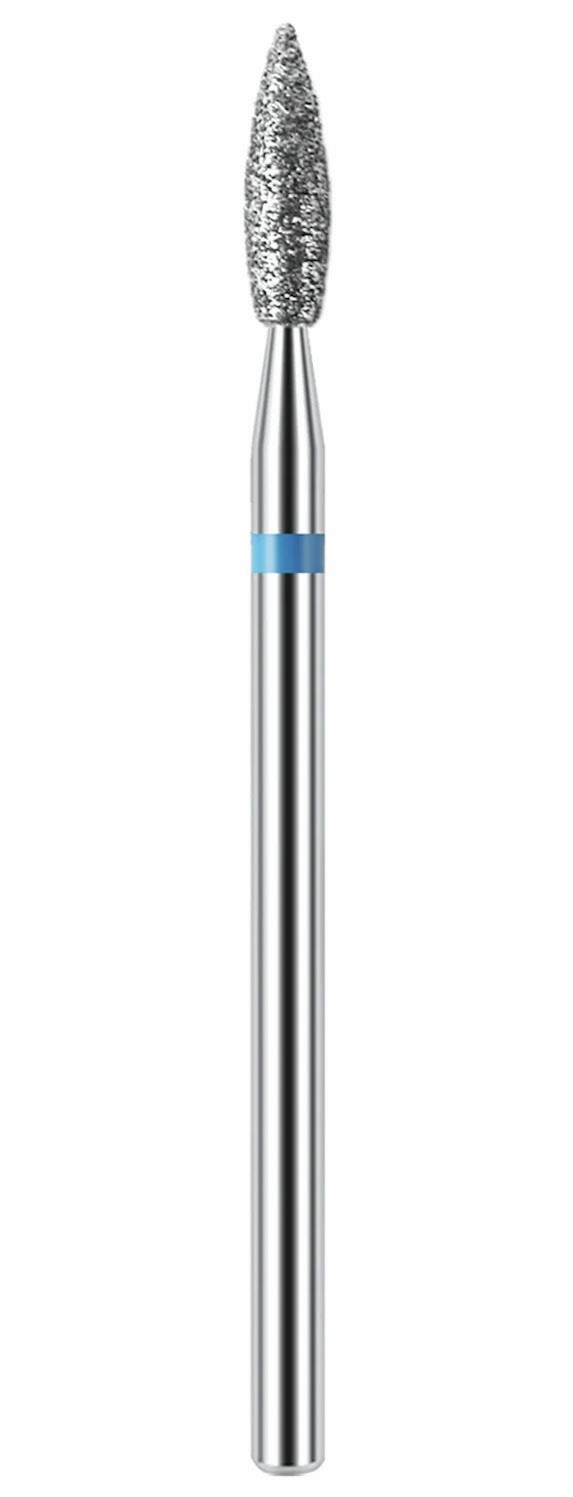
The Manicure Company Diamond Flame Bit £5.19 inc VAT
www.themanicurecompany.com
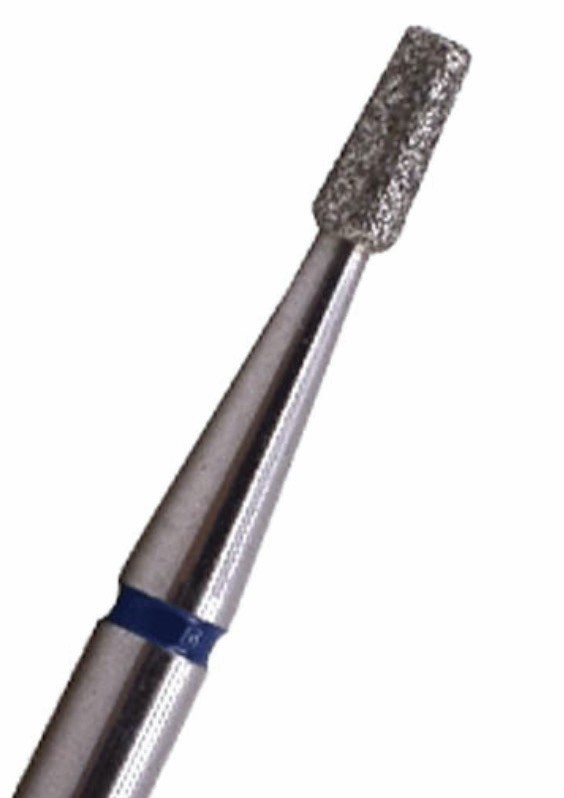
The GelBottle Inc Cuticle Smoother Bit £9.95 + VAT
www.thegelbottle.com
Nail prep & cuticle care
“When it comes to natural nail or cuticle work, reach for diamond bits,” details a MelodySusie representative for product development. “The metal barrels are coated in tiny diamond particles, which makes them suited to cleaning around the cuticle or prepping the nail surface.”
Diamond bits are intended to scratch off residue, debris and product buildup on nails. “They typically feature synthetic or natural diamond particles, and are strong and long-lasting,” shares Katie Clark, founder of Katie Barnes Tool
Katie Clark
Range & Education. “Diamond bits often have a stainless steel core, then the diamond particles are added to the head.” They tend to create more dust and friction than carbide or ceramic bits.

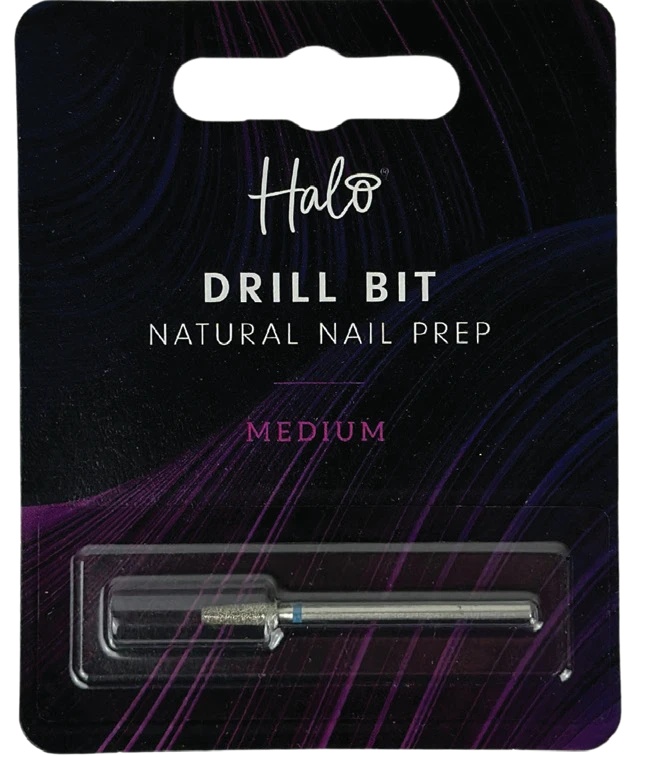
Halo Natural Nail Prep Drill Bit – Medium £6.08 + VAT
www.purenails.co.uk
KB The Erin Cuticle Push & Lift E-File Bit £12.99 inc VAT
www.katiebarnesacademy.com
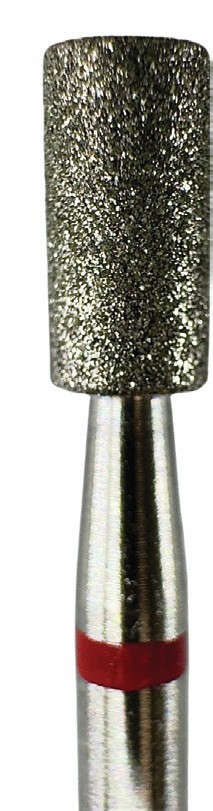
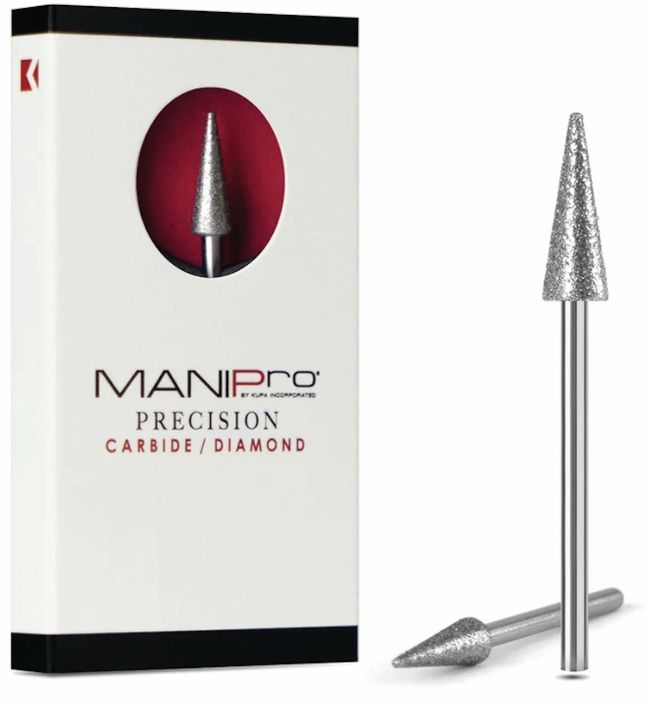
KUPA Diamond Bit Cone – Medium £11 + VAT
www.sweetsquared.com
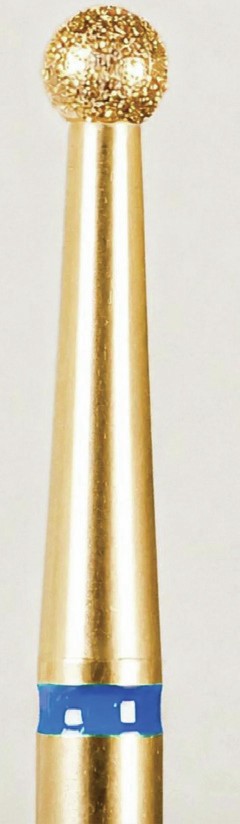
Willow The Medium Ball (Gold PVD) £11 + VAT
www.willowacademy.com
HD Professional Nail Systems Flat Top Tapered Cuticle Skiver Bit £9.99 + VAT
www.hazeldixonnails.com
Acrylic & hard gel removal
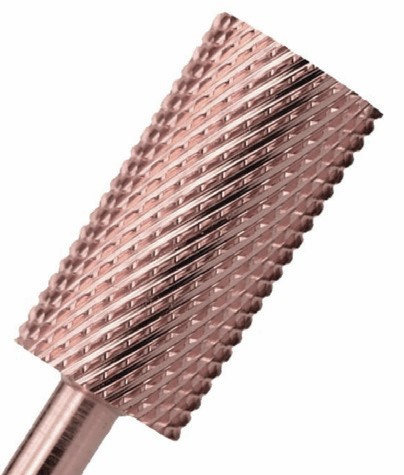
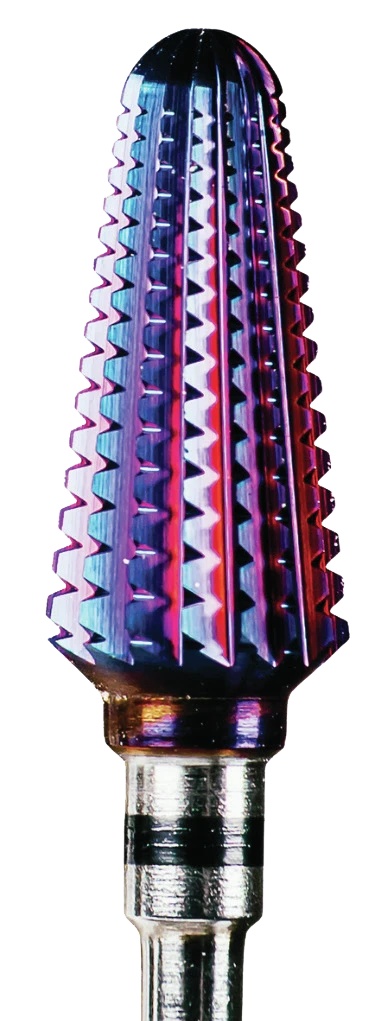
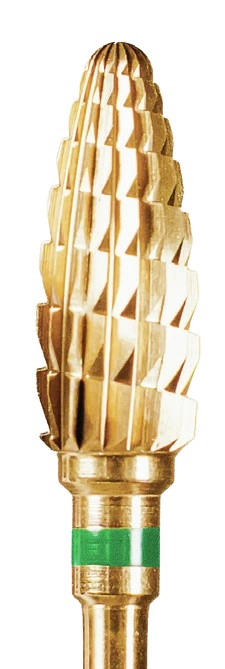
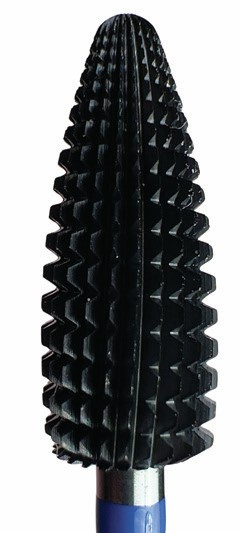
Carbide bits should not be used on the natural nail, but rather to debulk and remove builder gel, acrylic and hard gel enhancements. They feature flute-like cuts, which enable them to shave off product quickly. Deep and large flutes create a coarse grit, while shallower flutes indicate a finer grit. Tungsten carbide metal is commonly used for this bit type, owing to its durability and strength.
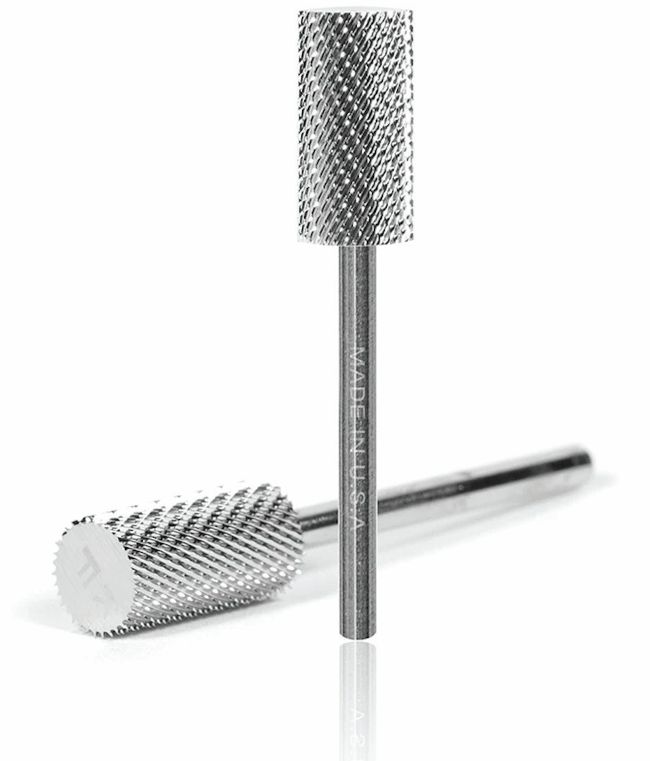
HD Professional Nail Systems Carbide Flat Top Rose Gold Bit – Medium £13.99 + VAT
www.hazeldixonnails.com
Willow Purple Willow – Extra Coarse £19 + VAT
www.willowacademy.com
Willow Green Smoothie in Coarse (Gold PVD) £23 + VAT
www.willowacademy.com
KUPA Carbide Bit 3/32 – Large Barrel – Fine £11 + VAT
www.sweetsquared.com
KB Tornado E-File Bit £23.49 inc VAT
www.katiebarnesacademy.com
Gel polish removal
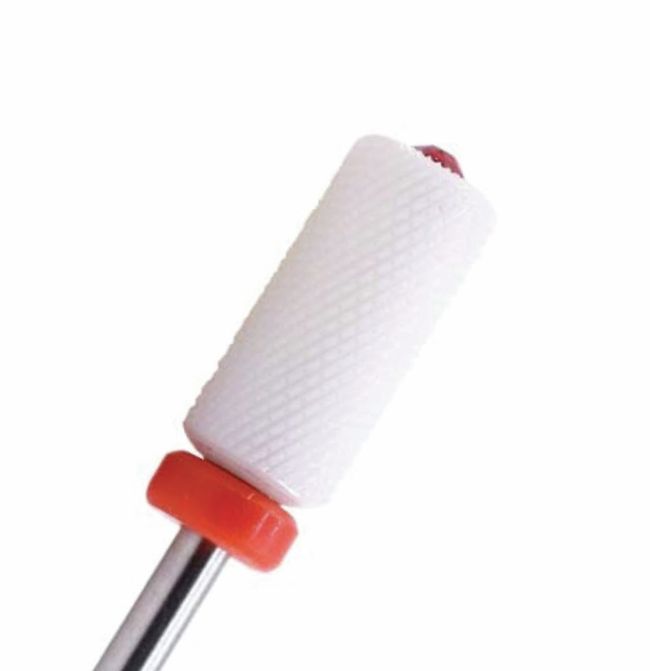
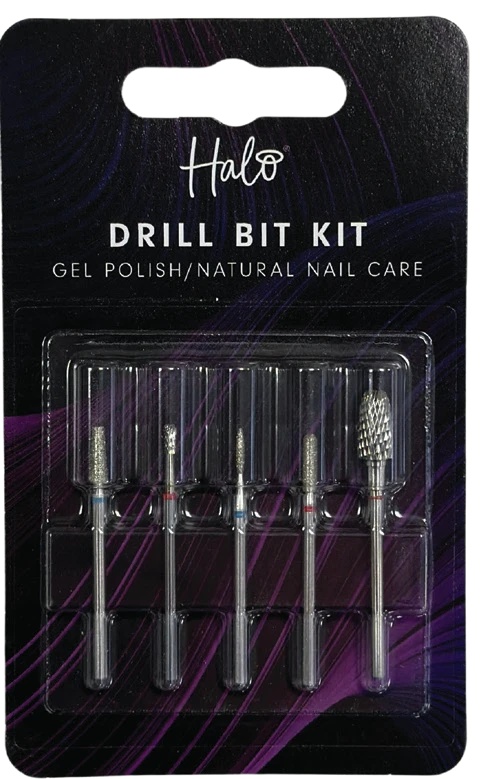
Ceramic bits also feature flute-like cuts to shave off product, however they are made from non-metal composite materials and are more fragile than carbide bits, thus better suited to gel polish removal. Ceramic bits work to remove product gradually and smoothly, and can be used to refine the surface of enhancements. Ceramic transfers less heat than carbide during standard use.
Halo Drill Bit Kit – Gel Polish/Natural Nail Care £15.99 + VAT
www.purenails.co.uk
The GelBottle Inc Gel Remover Bit £14.95 + VAT
www.thegelbottle.com
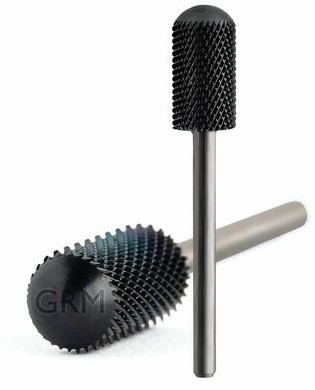
Andreia Professional Conical Ceramic Bit £17.99 + VAT
www.salon-services.comwww.andreiaprofessional.com

Gelish Medium Smooth Round Top Large Barrel Go File Bit £15.95 + VAT
www.gelishmorgantaylor.co.uk
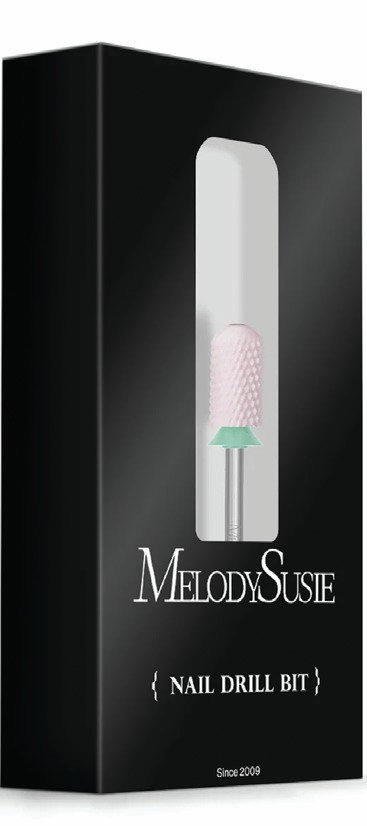
MelodySusie Smooth Round Top Large Barrel Ceramic Nail Drill Bit £8 + VAT
www.melodysusie.com
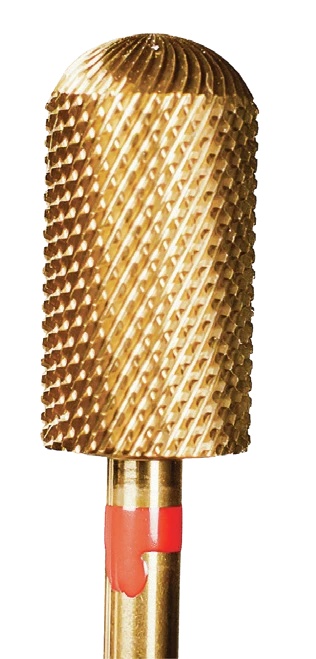
Willow Penultimate Fine (Gold PVD) £18.50 + VAT
www.willowacademy.com com usie Smooth R e Barrel Cera elBottle Inc Gel ver Bit £14.95 + thegelbottle.com
PRESSURE POINTERS
“One of the biggest misconceptions is that using an E-file at a low speed is automatically safer,” shares Melanie
Melanie Lewendon Lewendon, Scratch Stars Educator of the Year 2024 & Online Educator of the Year 2025. “The RPM (revolutions per minute) should always be selected based on the bit being used and task being carried out. If the speed is too low for the task, many nail technicians compensate by applying more pressure.”
Katie Clark agrees, noting that nail pros ‘end up applying more pressure, moving too slowly or repeatedly passing over the same area’ in this scenario. “For product removal, speeds of 20,000 to 30,000 RPM are recommended, whereas more detailed product refinement around the cuticle area may require lower speeds, around 10,000 to 15,000 RPM, depending on the bit and task,” she reveals.
As the Willow spokesperson explains: “When too much pressure is applied, the E-file bit is forced to drag against the product, rather than gliding smoothly, which generates friction and heat spikes. It is important to maintain consistent movement across the nail, so heat is distributed evenly. Holding an E-file bit in one place for too long allows heat to build up.”
‘‘
Understanding E-file bits is just as important
‘‘ as choosing the correct E-file.
Andreia Profes Ceramic Bit £ www.salon-se www.andreiap
Pedi perfect
For pedicures, use diamond bits: a fine grit (signified by a red or yellow band) for delicate areas, medium grit (blue or red band) for general work and coarse grit (green/black band) for tough calluses on feet.
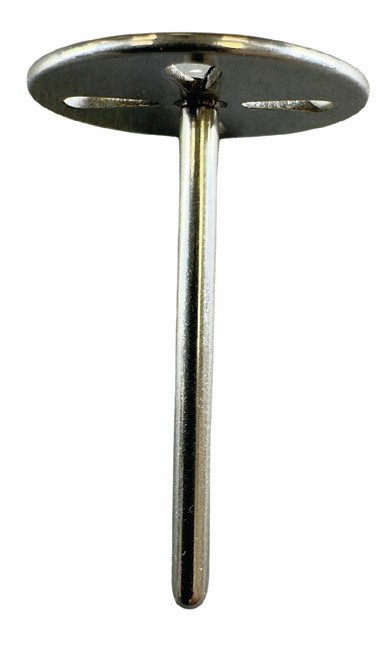
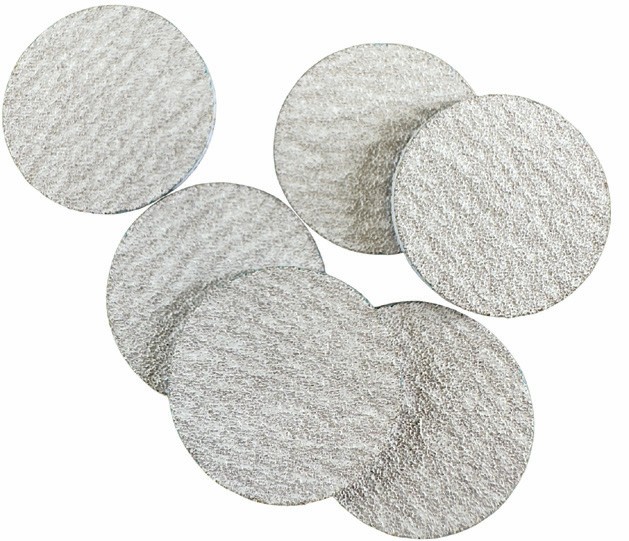
KB E-File Sanding Disc Holder £21.99 inc VAT & Sanding Discs £19.99 inc VAT
www.katiebarnesacademy.com
HD Professional Nail Systems The Pedi Bit – available in Fine, Medium & Coarse £22.99 + VAT
www.hazeldixonnails.com
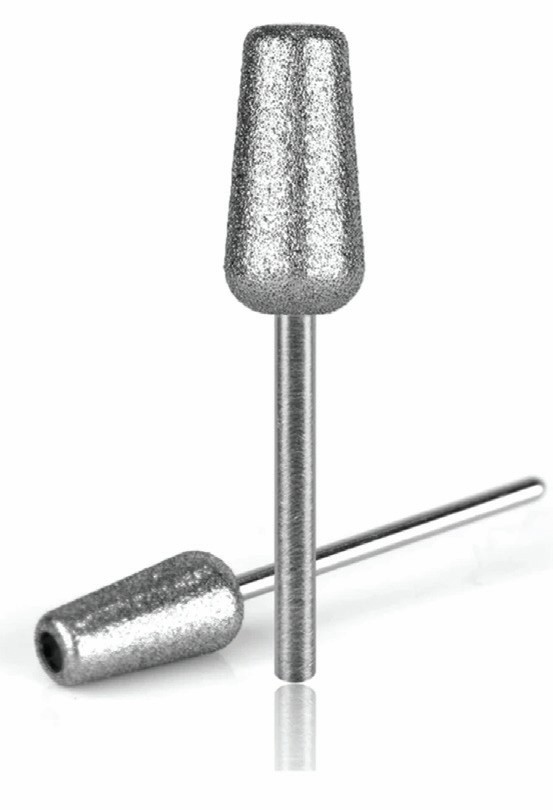
KUPA Diamond Pedicure Bit – Medium £13.45 + VAT
www.sweetsquared.com
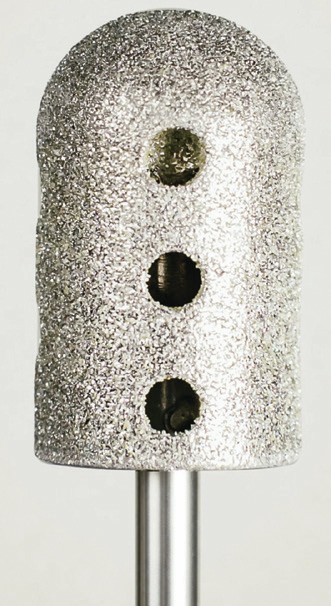
Willow The Mulberry – Medium £16.50 + VAT
www.willowacademy.com
CLEANING & MAINTENANCE
“Cleaning and disinfection are two separate stages and shouldn’t be treated as interchangeable,” details Katie Clark. “The cleaning stage removes visible dust, product and debris using warm soapy water and a scrubbing brush and/or ultrasonic cleaner. High frequency sound waves in the cleaner create microscopic bubbles within the water which grow and implode, dislodging contamination.
“The second step is disinfection, where bits are submerged in a hospital-grade disinfectant solution for the manufacturer’s specified contact time,” Katie continues. “Where sterilisation forms part of a business’ infection control protocol, only bits that are suitable for sterilisation should then undergo this process.”
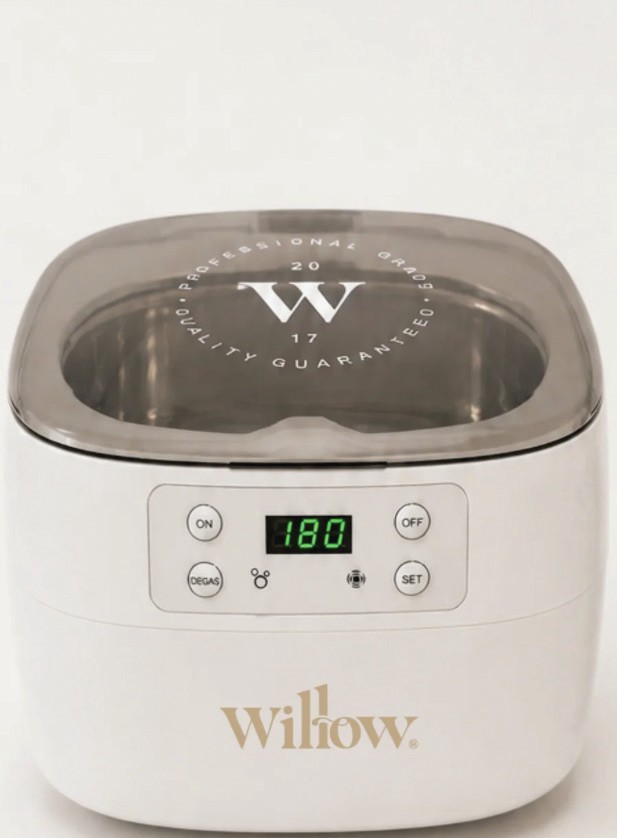
Willow Ultra Cleanse & Ultra Sonic Solution Bundle £57 + VAT
www.willowacademy.com “Never leave bits soaking during the disinfection stage for longer than recommended, as this may damage or corrode them,” advises Melanie Lewendon. “Remove and rinse if required, and allow to dry fully on a clean, disposable towel.”
Refinement
“Mandrel bits, made from rubber or metal, are designed to be used in tandem with sanding bands – which are made from sandpaper and need to be replaced after each use,” shares Katie Clark. Sanding bands should be slipped onto a mandrel bit for use, and removed and disposed of afterwards – as they cannot be disinfected.
Most commonly used for surface work, refining and natural nail prep, sanding bands are available in coarse, medium and fine grits and should be used at 1,000 to 7,000 RPM on natural nails, and 7,000 to 20,000 RPM on enhancements.
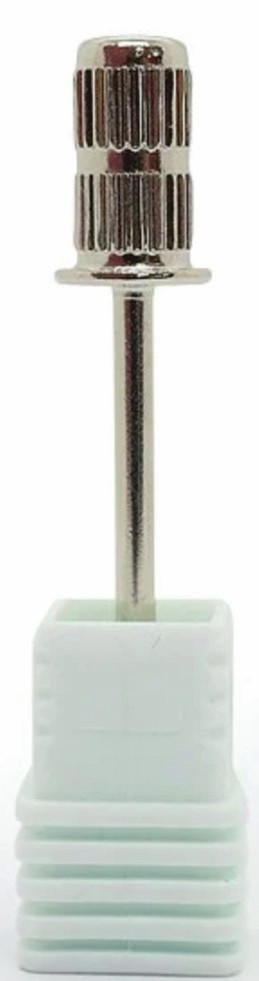
Glitterbels Classic Carbide Mandrel Bit £11 inc VAT & Sanding Bands Medium 150-grit £9 inc VAT
www.glitterbels.com
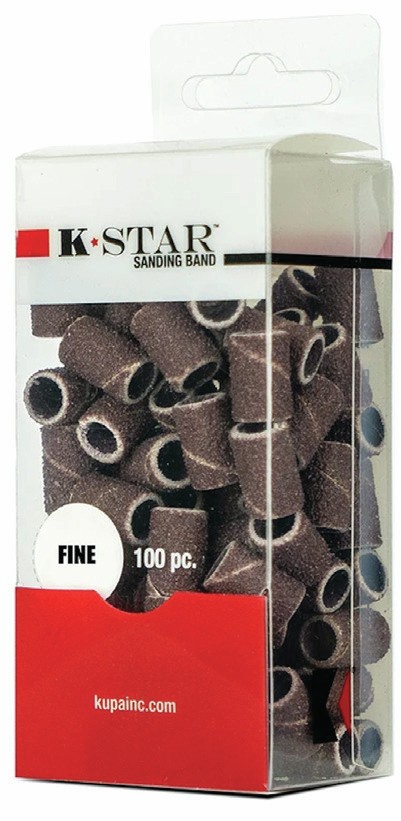
KUPA Premium Sanding Bands – Fine (100pk) £7 + VAT
www.sweetsquared.com
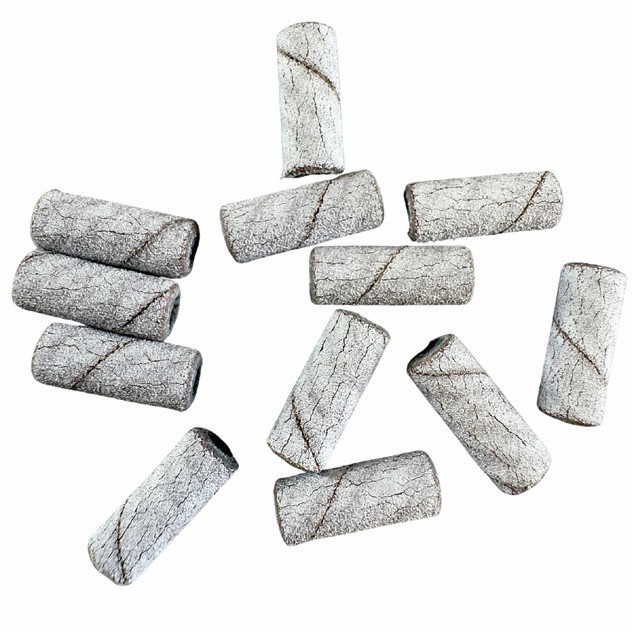
KB Skinny Mandrel E-File Bit £23.49 inc VAT & Skinny E-File Sanding Bands 240-grit (100pk) £17.99 inc VAT
www.katiebarnesacademy.com
SHAPE MATTERS
“One of the biggest E-file mistakes I’ve noticed is nail techs choosing the wrong shape of carbide bit,” reveals London-based nail educator, Rebeca Dounetas of @rebecadounetas_naileducator. “Many don’t realise how the shape of the bit
Rebeca Dounetas affects how safely and efficiently they can debulk product. A bit that isn’t well-shaped can make this process much slower and reduce confidence.”
Katie Clark serves up insight on choosing the right shape of bit for each element of a nail service, commenting: “An E-file bit’s shape determines where and how it makes contact, so understanding the working area of each shape is just as important as understanding its grit:
• Barrel/straight bits: ideal for product removal, debulking and refining larger surface areas.
• Tapered/cone bits: useful for more controlled product refinement and accessing narrower areas.
• Safety bits: feature a smooth or rounded top, allowing you to work more confidently around areas such as the cuticle zone, while using the working surface of the bit for product refinement.
• Flame bits: commonly used during cuticle preparation to lift and exfoliate non-living tissue and clean around the nail folds.
• Ball bits: used after the cuticle has been correctly lifted to exfoliate and remove non-living tissue. A ball bit shouldn’t simply be run over a flat cuticle; the tissue needs to be correctly lifted first so the bit can effectively exfoliate.
• Needle/precision bits: designed for detailed work and accessing small or difficult-to-reach areas.
• Mandrels with sanding bands: versatile for tasks such as nail prep, product refinement and debulking, with the grit selected according to the service being performed.”
‘‘ An E-file bit’s shape determines where and how it makes contact, so understanding the working area of each shape is just as important as understanding its grit. "
Finishing
“Silicone bits are great for polishing and buffing natural nails or enhancements to a high gloss,” comments a MelodySusie product development representative. Made from a flexible, rubber-like material infused with micro-abrasives, silicone bits can gently buff away stubbon cuticle tissue, smooth out scratch marks and exfoliate dry, hardened skin and hangnails.
“Silicone bits are ideal for removing minor surface imperfections and creating a smooth, polished finish,” adds Michelle Brookes, Scratch Stars Ultimate Educator of the Year. They can be used to help massage cuticle oil into the nail plate, and serve as a final buffing
Michelle Brookes step to create a smooth, glossy or satin-like finish on enhancements before applying top coat.
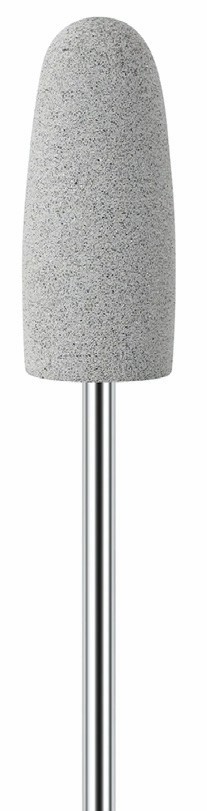
The Manicure Company Silicone Shining Drill Bit £5.19 inc VAT
www.themanicurecompany.com
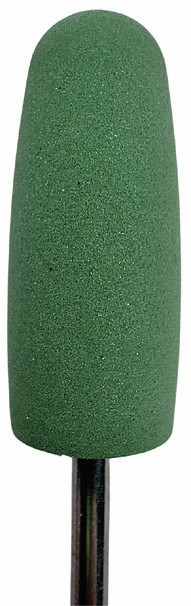
KB The Lucy Silicone Polishing Bit – Large £14.99 inc VAT
www.katiebarnesacademy.com
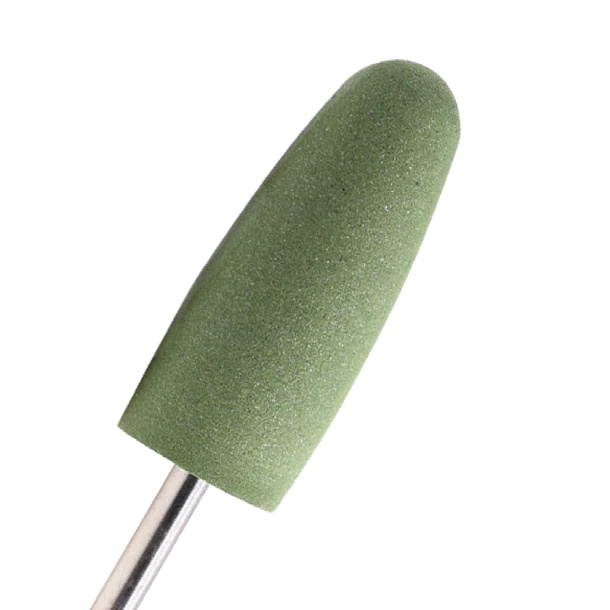
HD Professional Nail Systems The Finisher Bit – Polisher – Medium £4.49 + VAT
www.hazeldixonnails.com