The science behind the GEL POLISH SYSTEM
From ingredient information to longevity advice, Scratch compiles gel polish insights from experts & product points to note
JESS WATTS REPORTS

Nails by en Vogue educator, Casey-Leigh Boucher (@abrushofperfectioncaseyleigh).
Gel polish revolutionised the nail industry with its ease of application, durability and creative opportunities. The product found its footing in 2009 and 2010 – and widespread demand followed almost immediately.
Nail industry veteran, Marian Newman BEM, identifies gel polish as the ‘most popular nail service’ – and it’s easy to see why.
“Gel polish cures quickly and should last for two to three weeks without chipping or losing shine,” she explains. “It can also create a strengthening nail overlay and help avoid breakages.”

Marian Newman BEM
However, with popularity comes scrutiny. The vast reach of the gel polish system has sparked growing conversations regarding ingredients and safety. Online discourse around HEMA, TPO, curing and allergic reactions has left many uncertain about what to believe.
It’s time to face the facts. Featuring science-backed evidence and expert insight, Scratch’s guide to the gel polish system cuts through the noise – covering everything from ingredient information and the science behind curing, to prep and aftercare essentials. Let’s dive in…
PRODUCT POINTERS
Unlocking the benefits of the gel polish system starts with choosing the right products – and in a highly saturated market, the options can be overwhelming. So, what makes a high-quality gel polish – and how do you find one you can trust?

Clare Hanson
As Scratch Stars Awards finalist 2026, Clare Hanson, states: “Doing your due diligence before using any nail system is imperative.”
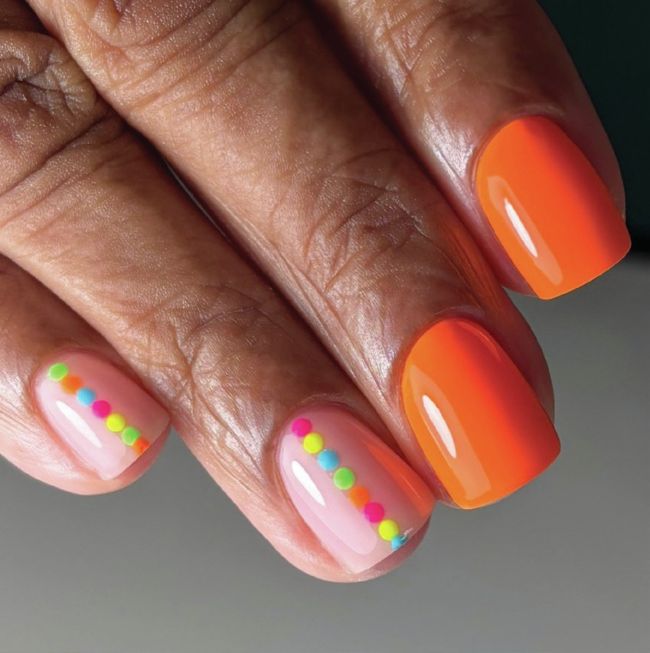
Polka dots enhance these neon nails by Marzena Maria Zygmunt.
Technical terms
Safety Data Sheet (SDS): A 16-section product information document that lists potentially hazardous ingredients and their percentages. Technical Data Sheet (TDS): A document that outlines the technical specifications of a product – including recommended application, curing times and compatibility within a system. Cosmetic Product Safety Report (CPSR): A legal document required for every cosmetic product sold in the UK and EU. A CPSR assesses the safety of a formula and confirms it is safe for consumer use. Period After Opening (PAO) symbol: A graphic on product labels that denotes how long it is safe and effective to use after its seal is broken. For example
Oligomers: Short chains of molecules that are not yet fully formed polymers. When exposed to UV or LED light, they link together to form a solid structure.
‘‘ The products you choose can often be what sets you apart from other nail professionals and elevate the client experience. ‘‘

Mary Ellon Ballance
Mary Ellon Ballance, director of education at en Vogue, says: “High-quality professional nail brands offer products that perform consistently well, are durable and meet curing standards, while providing education and support to help nail techs grow their skills and confidence. The products you choose can often be what sets you apart from other nail professionals and elevate the client experience.”
en Vogue lac it! Gel Polish in 50 Shades of Red £POA www.envoguenails.eu

Jim McConnell
“Regarding ingredient quality, there are some simple checks that you can carry out,” says Jim McConnell, leading nail product chemist & co-founder of Light Elegance. “Look for the content of oligomer molecules, which have long names such as Bis-HEMA Poly(1,4-butanediol)-9/IPDI Copolymer. If an ingredient list has a few oligomers at the start, the product will likely cause a lower exothermic reaction, so generate less heat when curing. It will also have better tensile and elongation strength and be more durable.”
Light Elegance P+ Gel Polish in Ask Alice £14.95 + VAT www.lightelegance.co.uk
Gel polish pricing
From a solid colour to elaborate nail art, gel polish is one of the most adaptable services a nail tech can offer – which makes it one of the hardest to price.
“Some nail techs focus on the cost of the gel polish product, but treatment pricing should be determined by experience, training, the equipment you use and time you spend with each client,” shares Katarzyna Korzeniak, Scratch Stars Gel Polish Stylist of the Year finalist 2026.
“Ultimately, the goal is to make sure the service is profitable, while offering good value to clients.”

Katarzyna Korzeniak
Clare Hanson comments: “I work out the number of services every product or tool in my kit can produce. Then I factor in the hours I work, my skills, knowledge, CPD and rent.”
“Low prices may attract clients initially, but it can be difficult to build a sustainable business that way,” adds Faranak Shafie, Scratch Stars Awards finalist 2026. “Clients who value quality will stay because of the service they receive, not the price. It is important to charge enough so you can cover your costs, invest in high-quality products and continue developing your skills.”

Faranak Shafie

Amy Bearman
“While a gel polish system’s wear time, shine and range of colours are important, legal compliance must also be considered,” says Halo VIP, Amy Bearman. “Identify brands that are confident and honest about their formulations, make their Safety Data Sheets (SDS) available, comply with guidelines and complement your business and values.”
Halo Gel Polish in Sunset £5.95 + VAT www.purenails.co.uk
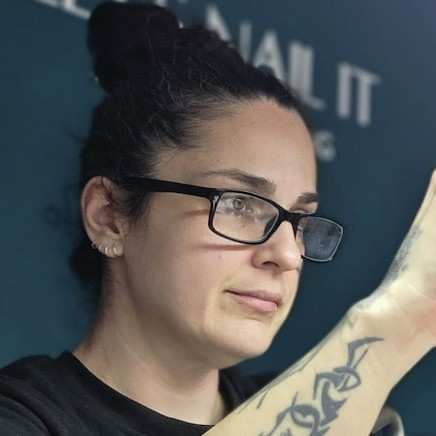
Marie Juranova
Marie Juranova, Scratch Stars Awards finalist 2026, provides her top tip for testing the performance of a gel polish system: “I recommend trying out a brand’s black, white and red shades first. These colours are difficult to formulate well and can tell you a lot about how a brand values pigmentation, coverage and consistency.”
WHAT TO LOOK OUT FOR:
Readily available SDS and TDS information.
Products designed and tested to work as a complete system.
Professional education, technical support and training resources available with products.
Clear guidance on safe use, application and removal.
Vague, incomplete or inaccurate ingredient listings.
No allergen information provided.
No PAO symbol or expiry date.
Streaky, inconsistent or under-performing formulas.
Scan here to read
Scratch’s
full guide to spotting a high-quality product.
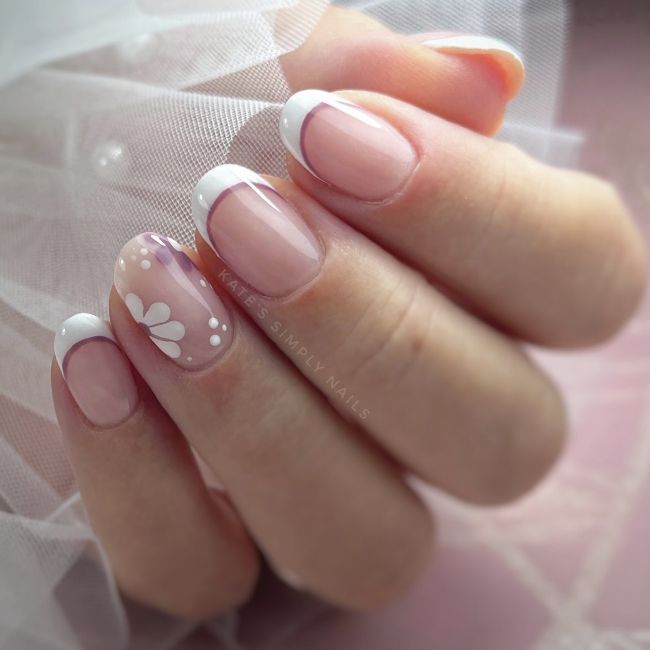
Floral accents elevate this French manicure by Katarzyna Korzeniak.
INGREDIENT INSIGHTS
One nail industry conversation has generated more debate – and confusion – than most: the safety of gel polish ingredients. HEMA and TPO: terms that were once confined to formulation labs, have been circulating in client consultations, social media comment sections and industry forums.
“I think this conversation is positive for the industry because it encourages higher standards, better education and greater professionalism,” says Justyna Pryke, Scratch Stars Awards finalist 2026. “Clients are becoming more informed, and that pushes nail techs to continue learning and improving their skills – which ultimately benefits everyone.”

Justyna Pryke
The science behind safety
“The biggest misconception about gel polish is that certain ingredients are ‘toxic’ or ‘dangerous’,” says Caroline Rainsford, director of science at the Cosmetic, Toiletry and Perfumery Association (CTPA). “All cosmetic products supplied in the UK must be safe, as their manufacture and supply are governed by the UK Cosmetics Regulation (UKCR). This is part of UK consumer product safetylegislation, and compliance is mandatory,” Caroline states.

Caroline Rainsford
“The UKCR contains extensive annexes of banned substances and ingredients which may only be used when they comply with specific restrictions,” she continues. “These restrictions have been set following a detailed scientific review by a panel of independent scientists, who confirm that the ingredient is safe under these particular conditions of use.”
"Proper prep, correct curing, high-quality products and protecting the skin during ‘‘application make a huge difference. ‘‘
HEMA
What is it? According to nail education platform, NailKnowledge, 2-hydroxyethyl methacrylate (HEMA) ‘is a commonly used monomer in many nail products’ that ‘is mostly concerned with adhesion’.
What are the facts? Doug Schoon shares: “The issue is not that HEMA is automatically unsafe in nail products. The risk rises when uncured product comes into contact with the skin and/or when product is not properly cured, which can lead to irritation and, in some cases, skin allergy.”
Why is it being discussed? While HEMA is used in a number of industries, it has sparked concern within the nail world due to a rise in allergic reactions. HEMA is a known allergen, and repetitive skin contact can eventually trigger a reaction – as is the case with any chemical ingredient not intended to come into contact with skin.
What are the industry regulations? “Regulatory guidelines related to HEMA use in nail products vary by country and region,” reads an article on the NailKnowledge website.
Internationally respected authority in cosmetic chemistry and nail product safety, Doug Schoon, notes: “In the EU, HEMA (2-hydroxyethyl methacrylate) is restricted to professional nail products, and those products must carry the warnings: ‘For professional use only’ and ‘Can cause
Doug Schoon an allergic reaction’. These requirements applied starting June 3 2021 and September 3 2021, under Commission Regulation (EU) 2020/1682.”
“Regulation permits HEMA and a similar ingredient, DI-HEMA trimethylhexyl dicarbamate, to be used in products for professional use only,” adds Caroline Rainsford. She advises anyone with an allergy to ‘seek advice from a dermatologist or allergy specialist, who can help identify which ingredients to avoid and how to check product ingredient lists’.
The effect on nail techs: “Gel polish itself is not the problem when used correctly,” says Justyna Pryke. “The real issue comes from a lack of knowledge, rushed services or DIY use without an understanding of safe application and removal. Proper prep, correct curing, high-quality products and protecting the skin during application make a huge difference.”
Marie Juranova adds that although she ‘experienced some lifting’ when switching to a HEMA-free formula, she does not blame the products. “Instead of putting the onus on the products, I learned more about base coats, natural nail types and product matching – knowledge that greatly improved retention.”
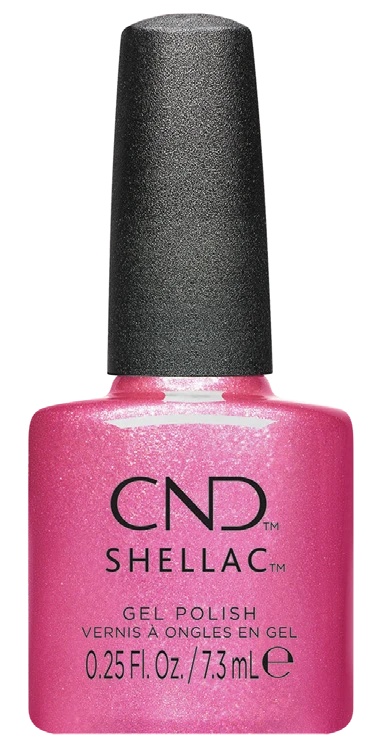
CND Shellac
™ in Covetable £14.95 + VAT
www.sweetsquared.com
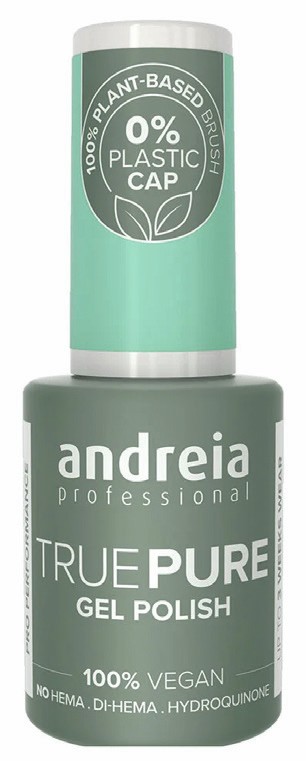
Andreia Professional True Pure Gel Polish in Aqua Green £7.99 + VAT
www.salon-services.comwww.andreiaprofessional.com
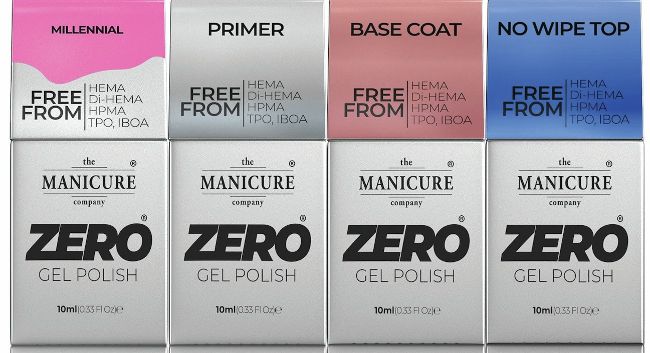
The Manicure Company Zero Gel Polish® Try Me Kit £34.45 + VAT
www.themanicurecompany.com
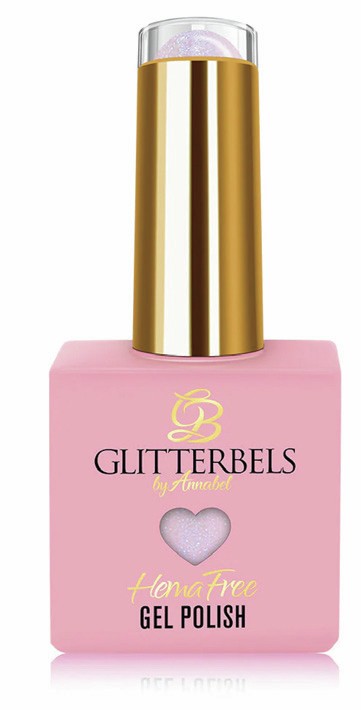
Glitterbels Hema Free Gel Polish in Pearly-Whirly £8.99 inc VAT
www.glitterbels.com Future-proofing pointer
Changes to how cosmetic ingredients are regulated are published several times a year in the EU and UK, therefore it is difficult to know exactly what the future holds. However, Caroline Rainsford shares the following insight with Scratch:
“An upcoming ingredient ban which is likely to be of most relevance for nail products is on triphenyl phosphate, a chemical used in some gel and lacquer products as a plasticiser and stabiliser. Products containing this ingredient can no longer be placed on the market in the EU from 1 January 2027, with new products no longer available to buy from 1 July 2028.
“The UK’s independent scientific committee, SAG-CS, is currently reviewing the safety of triphenyl phosphate under the UK Cosmetics Regulation, meaning there will be a wait for its decisions and subsequent regulatory action.”
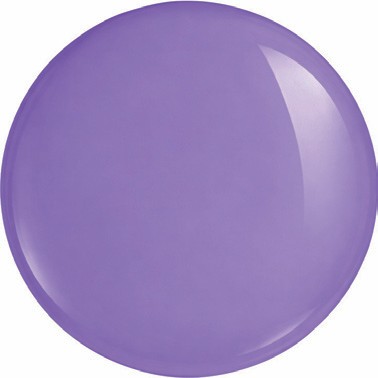
HARA Professional Gel Polish in Grape Punch £7.40 + VAT
www.astonandfincher.co.uk

For more details about cosmetic science and safety, visit the CTPA’s dedicated website: www.thefactsabout.co.uk
‘‘ Clients are becoming more informed, and that pushes nail techs to continue learning and improving their skills. ‘‘
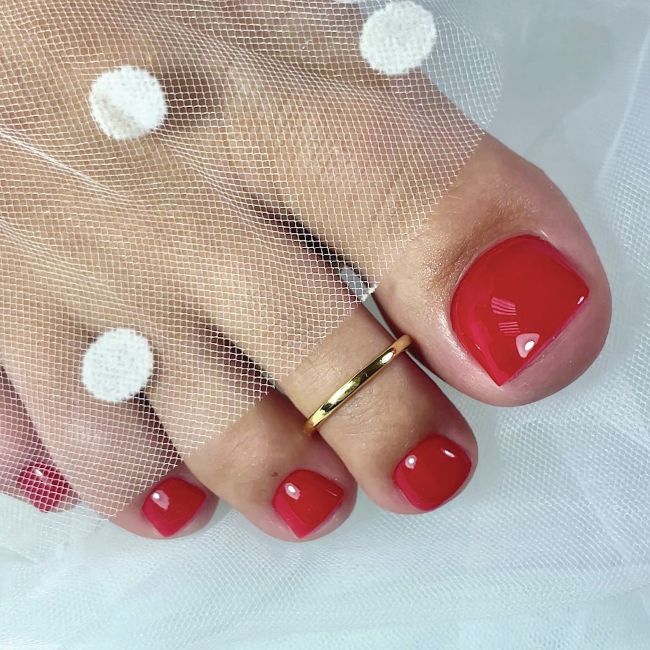
A gel polish pedicure by Erika Beck.
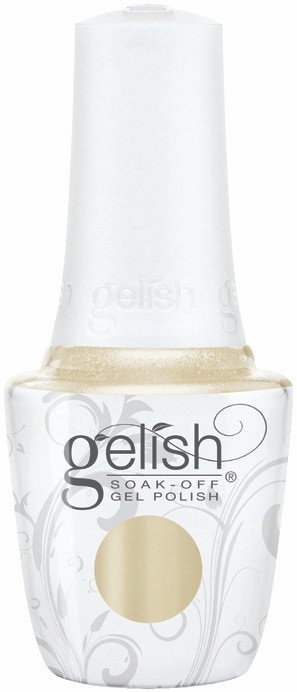
Gelish Soak-Off Gel Polish in Sunburst Your Bubble £16.99 + VAT
www.gelishmorgantaylor.co.uk
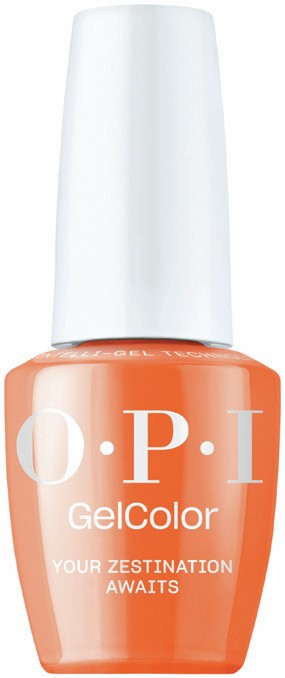
OPI GelColor in Your Zestination Awaits £19.90 + VAT
uk.wella.professionalstore.com TPO
What is it? “Trimethylbenzoyl Diphenylphosphine Oxide (TPO) is an ingredient commonly used in artificial nail products to aid the curing process,” says Caroline Rainsford. “It absorbs light from the UV/LED lamp to kick-start the polymerisation (curing) process, which is required to produce the hard-wearing artificial nail surface.”
Why is it being discussed? Conversations surrounding TPO started at working group level in March 2024, and when tested, the ingredient was classified as a ‘carcinogen, mutagen, reprotoxic (CMR) category 1B reproductive toxicant’. This triggered the inclusion of TPO in the prohibited substances list of the EU’s Cosmetics Regulation.
What are the industry regulations? TPO was banned from cosmetic products within the EU market from 1 September 2025. Companies and professionals in affected member states had to discontinue sale, supply and professional use of products containing TPO from this date. Remaining stock must have been withdrawn from professional premises, and compliant alternatives sought from suppliers. Meanwhile, TPO will be banned from cosmetic products placed on the market in Great Britain from 15 August 2026, and professionals will not be able to purchase products containing TPO after 14 February 2027.
What are the facts? “The ban under the EU’s CLP regulation was based on how TPO might behave in a ‘worst case’ situation – for example, when our bodies are exposed to a very large amount,” says Caroline Rainsford. “This is not how TPO is used in cosmetics.”
In an open letter to the European Commission about the prohibition of TPO in cosmetic products, Doug Schoon wrote: “[The reclassification of TPO] was driven by animal studies, particularly in rats, in which repeated oral administration at high doses produced adverse male reproductive outcomes including testicular atrophy, reduced sperm counts and impaired fertility. It is important to stress that:
• These findings arise exclusively from oral toxicity studies in laboratory animals.
• No human studies have been conducted on reproductive toxicity of TPO.
• The exposure conditions in these animal studies bear no resemblance to realistic exposure scenarios in cosmetic use, where TPO is present at ~1-3% in cured UV gel systems and where oral ingestion is neither intended nor foreseeable.”
Caroline Rainsford takes a similar stance, stating: “The ban on TPO in the EU – and in the UK in the near future, is based on extreme caution and doesn’t mean that cosmetic products containing TPO are unsafe.”
The effect on nail techs: “I amended my product selection to be TPO-free last year following the European ban, and clients have appreciated this,” says Marie Juranova. “At the same time, I think it is important to have balanced conversations around chemicals like TPO, instead of creating fear.”

Marzena Maria Zygmunt
Scratch Stars Gel Polish Stylist of the Year finalist 2026, Marzena Maria Zygmunt, adds: “Adding HEMA-free and TPO-free products to my kit has been positive for my business. It means I can cater to a wider range of clients and also builds trust, because clients know I’m aware of what’s happening in the industry and can offer options that suit their needs and preferences.”
CURING QUESTIONS
On the surface, curing gel polish may seem straightforward, but it is one of the most technically significant steps in the gel polish service – and one of the most misunderstood. Cure times, product thickness, lamp compatibility and manufacturer guidelines all play a critical role in achieving a proper cure. Get it right, and the result is durable, safe, long-lasting nail enhancements. Get it wrong, and the consequences can be serious.
Technical terms
Polymerisation: A chemical process in which small, individual molecules (monomers) are exposed to a catalyst, causing them to chemically bond to form long chain structures (polymers).
Photoinitiators: Chemical ingredients that trigger the polymerisation process by absorbing UV or LED light energy and converting it into a chemical reaction. Cure time: The duration required for gel polish to fully harden under a UV or LED lamp.
LED lamp: An electronic device that uses light-emitting diodes to cure gel polish. Though these do produce UV light, they cure gel polish faster than a traditional UV lamp.
The dangers of under-curing
“Understanding curing is essential for both client safety and product performance,” says Justyna Pryke. “Under-cured gel polish can lead to lifting, peeling, loss of shine and increased risk of sensitivities.”
Under-curing occurs when gel polish has not fully polymerised – meaning that although the surface may appear ‘dry’, uncured monomers remain trapped within the layers beneath. These are highly reactive molecules that, when left in contact with the skin and nail plate, can trigger irritation. Over time – and with repeated exposure, this can lead to an allergic reaction.
Once an allergy occurs, it is permanent: even trace amounts of an ingredient can trigger a reaction, and in some cases, a client may not be able to wear gel polish again.
“While the quality of the curing process relies heavily on a product’s formulation, nail techs also play a crucial role in ensuring a proper cure,” says Amy Bearman. “Applying a product too thickly can prevent photoinitiators from being able to absorb light, therefore it is recommended that you work in thin layers, curing between each.”
Katarzyna Korzeniak shares some warning signs of under-cured product: “The biggest red flags are wrinkling, softness during filing, unusual lifting or recurring service breakdowns. If any of these occur, it’s worth checking application thickness, lamp performance and product compatibility.”
Compatibility
Jessica Hales, Scratch Stars Gel Polish Stylist of the Year finalist 2026, reveals: “Using a compatible lamp and gel polish system is vital, as using an alternative combination can lead to retention issues, overexposure and allergies.”

Jessica Hales
“Manufacturers stipulate cure times and often recommend specific lamps, because the curing process depends on the right amount and type of light reaching the product,” adds Katarzyna Korzeniak.
Faranak Shafie advises: “When choosing a lamp, make sure it is a professional UV/LED lamp that meets UK and European standards. The lamp must be powerful and reliable enough to cure your products correctly.”
Most brands are clear that their gel polishes are formulated to work with a specific lamp, and following that recommendation is not optional: it is the only way to guarantee a full, safe cure. Using an incompatible lamp, however high-quality, can result in under-curing. Some brands have taken the extra step of testing their products against a wider range of lamps – giving techs a clearer picture of what is and isn’t compatible.
The manufacturer’s recommended curing times are also non-negotiable. They exist for a reason – and following them precisely is an important step for nail techs, to protect both their clients and work.
‘‘ The manufacturer’s recommended curing times are non-negotiable. They exist for a reason – and following them precisely is a hugely important step for nail techs to protect both their clients and work.‘
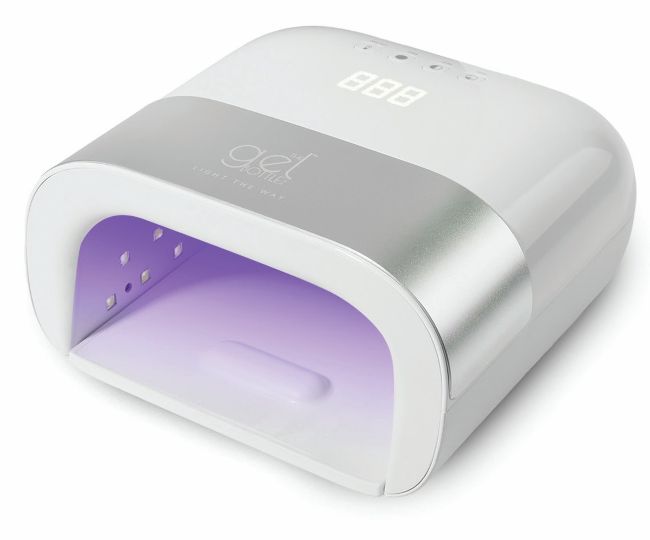
The GelBottle Inc Light The Way Nail Lamp £119 + VAT
www.thegelbottle.com
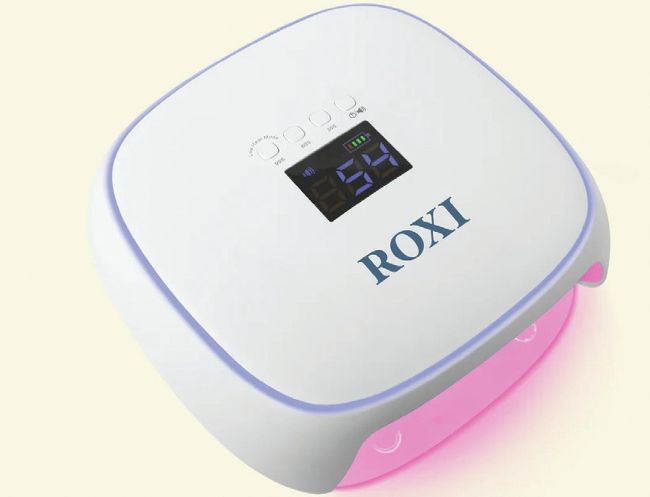
Artistic Nail Design LED Cure Box £195.95 + VAT
www.sweetsquared.com LONGEVITY LOWDOWN
A gel polish overlay can last up to three weeks, however this isn’t a given. Longevity is built from the ground up – starting long before the first coat of colour and continuing well after the client has left their appointment.
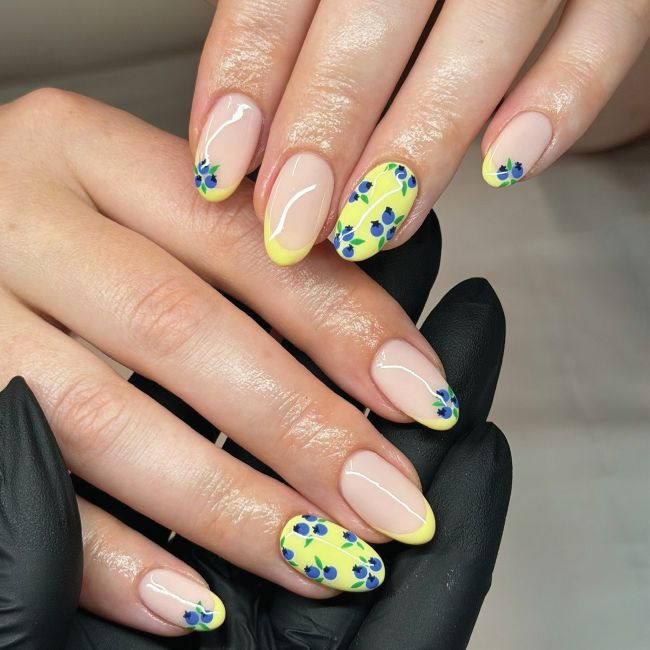
Blueberry and butter yellow nails by Jessica Hales.

Erika Beck
Prep
“The biggest contributor to gel polish longevity is nail plate preparation,” says Scratch Stars Awards finalist 2026, Erika Beck. “If it isn’t prepped correctly, products will not adhere properly and the enhancements simply won’t last.”
“I start my prep routine by sanitising my client’s hands or feet,” says Faranak Shafie. “I then remove any existing product carefully before carrying out cuticle work, shaping the nails and buffing the nail plate to remove surface shine.”
“Once there is no shine present, I wipe nails with either acetone or prep solution to dehydrate them, before applying primer,” Jessica Hales reveals.
Marzena Maria Zygmunt shares: “I’m really strict about nails being dust-free before any product is applied, and I ensure that product never touches the skin, as that can increase the risk of lifting, sensitivity and allergies. Taking time with prep ensures better retention and safer, longer-lasting results.”
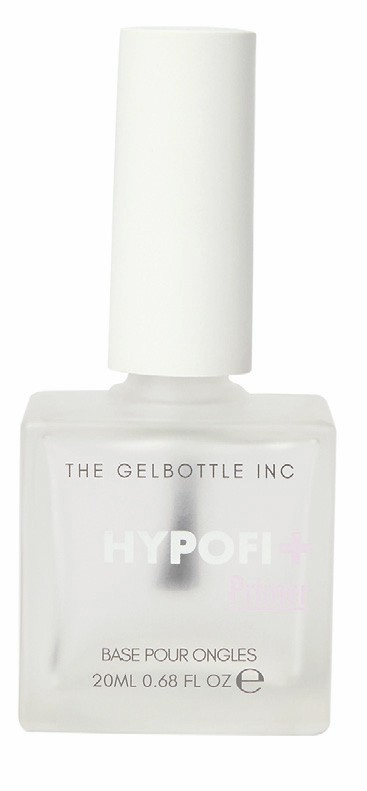
TGB HypoFix
™ Primer £17.95 + VAT
www.thegelbottle.com
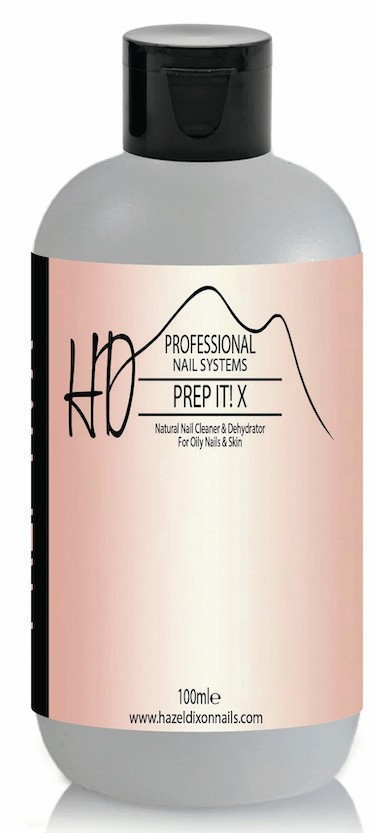
HD Professional Nail Systems Prep It! X £13.50 + VAT
www.hazeldixonnails.com
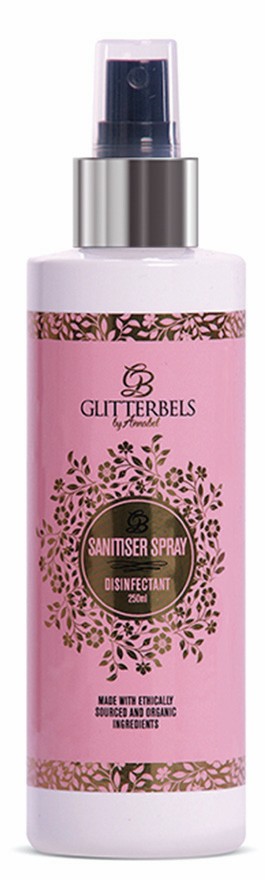
Glitterbels Sanitiser Spray £8.95 inc VAT
www.glitterbels.com
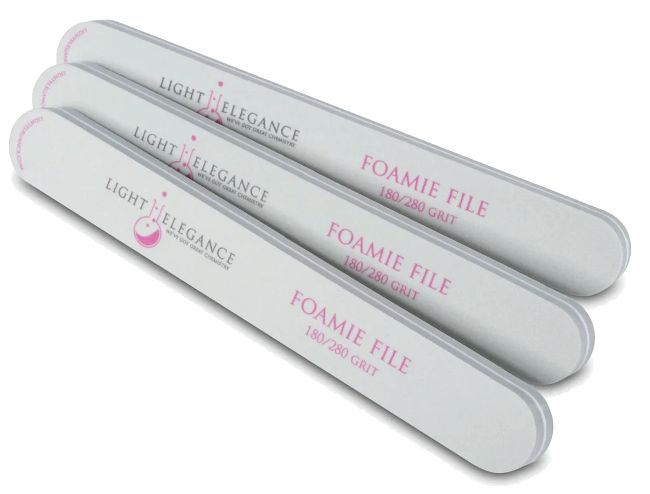
Light Elegance 180/280-grit Foamies (20pk) £32.95 + VAT
www.lightelegance.co.uk Aftercare
The longevity of a gel polish overlay is not just down to nail techs – clients have a role to play, too. “I always remind clients that my product application is 50% of the work, and good aftercare makes up the other 50%,” says Jessica Hales. “The combination of the two ensures good retention and a well-maintained finish.”
“How clients treat their nails between appointments has a big impact on how well their gel polish overlays last,” Katarzyna Korzeniak shares. “I always tell clients that gel polish is durable – but not indestructible.”
“Aftercare makes a huge difference; what clients do at home helps keep nails looking fresh for longer,” explains Marzena Maria Zygmunt. “There are a few simple steps that I advise clients to take: apply cuticle oil daily, wear gloves when cleaning or using harsh chemicals, and do not use nails as tools.”
“I tell clients that if they notice lifting or separation, they must book an appointment for a repair,” reveals Marie Juranova. “Leaving a lifted nail for too long can allow moisture to get trapped and increase the risk of an infection. I would always rather fix problems early than deal with bigger issues later.”
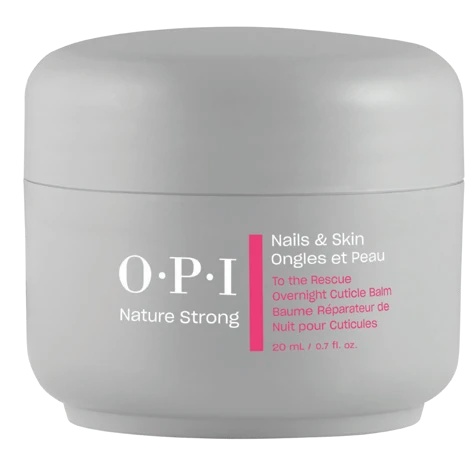
OPI To the Rescue Overnight Cuticle Balm £7.50 + VAT/RRP £24
uk.wella.professionalstore.com
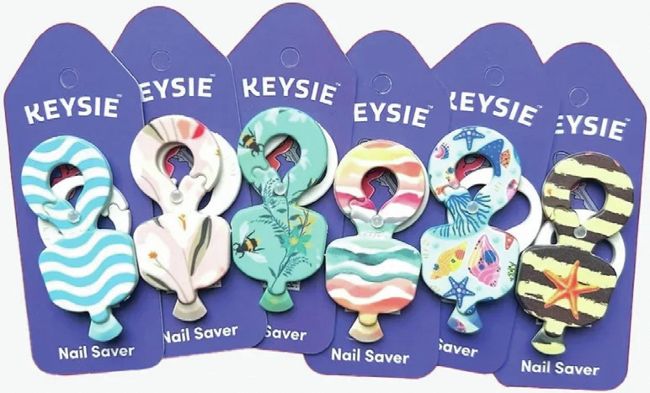
Patterned Keysie (25pk) in Summer Mix from £49.50 inc VAT for 25+ units/RRP £4.99 per Keysie
www.keysieco.com ‘‘ Aftercare makes a huge difference; what clients do at home helps keep nails looking fresh for longer. ‘‘
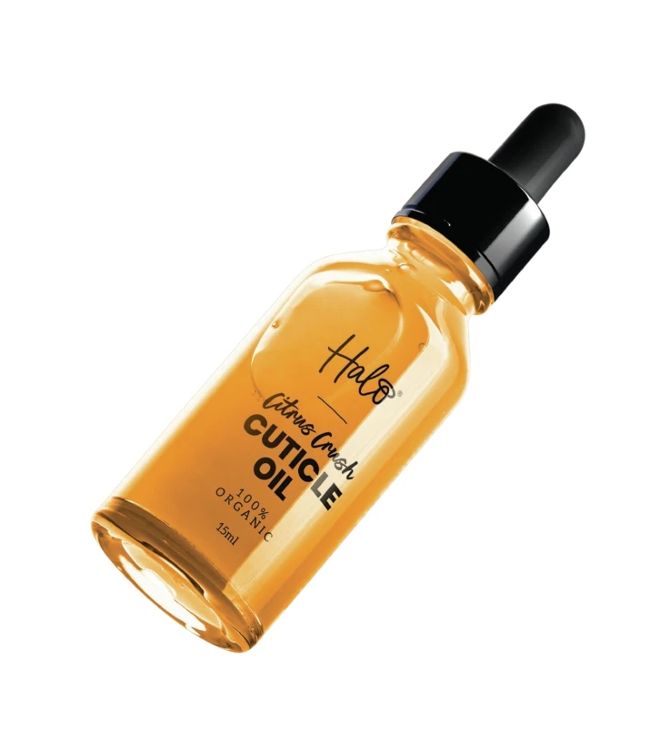
Halo Citrus Crush Cuticle Oil from £3.85 + VAT
www.purenails.co.uk