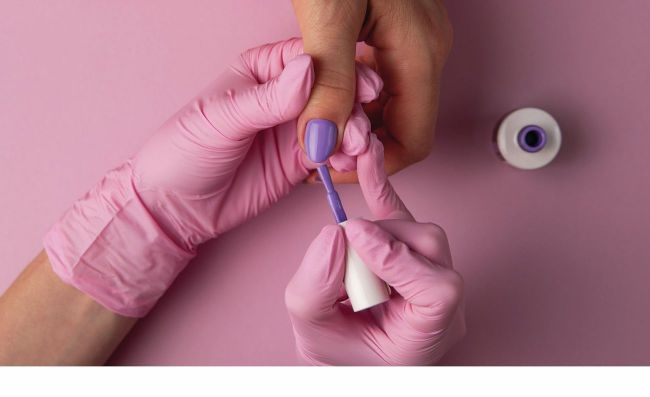
Elevate your service levels with ALEX FOX’S handy guide to gloves
Gloves are a frontline defence, and industry guidance is pushing all nail professionals to wear them. They ensure that skin is not repeatedly exposed to chemicals used in nail services and dust created from filing. Like masks, gloves are a safety measure, keeping nail pros safe and sanitary throughout the working day.
Choosing the correct material and thickness, changing gloves regularly and disposing of them properly are all part of good practice for professionals. The simple act of wearing the right gloves protects both technicians and their clients, and can make a significant difference to long-term health, hygiene and service quality.
Robert Giblett, industry expert & founder of the IKON. IQ brand, states: “As a nail technician, your hands are your most important tools. Every day, you work with chemicals that can cause allergies and skin problems. The right gloves can protect you, but the wrong ones might not help at all.
Robert Giblett
“Many nail techs develop allergies to chemicals like acrylates and methacrylates (the ingredients that help gel polish and L&P harden). Once you become allergic, even tiny amounts can cause painful rashes, swelling and burning skin. One of the most important ways to prevent allergies is by choosing the right gloves and using them correctly.”
Glove safety standards
“EN ISO 374:2016 is an international safety standard that tests how well gloves protect against chemicals and microorganisms,” Robert continues. “Within this standard, 18 chemicals are tested, however none of these include the acrylate or methacrylate chemicals commonly used in nail products. This means that the ISO-374 standard is not helpful for nail businesses, because it doesn’t test all the chemicals that pros interact with.”
Robert Giblett’s practical tips for techs
1. Follow best practices:
• “Never reuse disposable gloves.
• Change gloves between clients, or when they are contaminated with product.
• Immediately change gloves if they tear.
• If desired, use thicker gloves.
• If you have an allergy, change gloves every 30 minutes. Consider double gloving, wearing cotton gloves and/or skin barrier cream.
• Wash hands before and after wearing gloves.
• Use different glove types for different tasks, such as thicker gloves for mixing chemicals and cleaning up.”
2. Watch for warning signs. “These include skin tingling or burning while wearing gloves, redness after removing them and gloves that feel sticky or start dissolving. If this happens, change gloves immediately.”
3. Read the small print. “Check Safety Data Sheets (SDS) for your products, and look for glove recommendations from manufacturers.”
‘‘ Adopting gloves as part of daily practice may take some adjustment, but it’s a habit worth building. ‘‘
HOW TO PROTECT YOUR BODY WHEN HOLDING TENSE CLIENT HANDS
ABOUT CATRIONA LEITH
Cambridgeshire-based Cat Leith boasts 19 years’ experience in the nail sector. She balances salon and education roles, crafting artistic creations for the loyal clients of her business, The Nail Studio, while delivering high-quality training to pros as co-head of education for Hazel Dixon Nail Artist Academy.
Cat has scooped a multitude of awards, including the Scratch Stars Gel Tech of the Year and One Stroke Artist of the Year accolades in 2022, 2023 and 2024. As a result, she entered the awards’ Hall Of Fame for both categories.
www.thenailstudiocambridge.co.uk /thenailstudiocb @thenailstudiocb
A s a nail tech, you’ll know that clients love to hold tension in their hands. They don’t even realise they’re doing it: gripping, lifting and stiffening. Meanwhile you’re trying to create clean work on what feels like a claw machine. It’s one of the biggest challenges I’ve faced at the nail desk, and it has placed serious strain on my back and hands at times.
Getting clients to relax their hands isn’t just about making your job easier (although it definitely helps). It’s a crucial part of protecting your body and long-term health in this industry.
Tense hands = more work for you
When a client’s hand is stiff, you end up compensating for it. You lean in, twist your wrists, adjust your shoulders – and before you know it, your entire posture is compromised. But when their hand is relaxed? It’s a total game changer. You can move it easily, position it how you want and your work instantly becomes smoother and more precise.
Posture matters
Your posture can take a serious hit if you’re not careful. Constantly hunching over, craning your neck or reaching forward are all signs that something isn’t working, such as your setup or the position of clients’ hands.
Being mindful of your posture is easier said than done, especially when you’re deep in conversation or powering through a busy day – but it will make a big difference, both now and in the long-run.
Here are some simple tips to maintain good posture:
• Sit up straight.
• Keep your feet flat on the floor.
• Bring the client’s hand to you, not the other way around.
• Support their hand with a wrist rest, so you’re not chasing it around the nail desk.
Once a client’s hand is relaxed and properly positioned, you won’t feel the need to fold yourself in half just to see what you’re doing.
‘‘ Your back is going to carry you through your career, just as much as your hands – so you must look after it. ‘‘
Protect your back
Your back is going to carry you through your career, just as much as your hands – so you must look after it. A lot of the back pain that is common in this industry stems from small, repeated habits that accumulate over time. Relaxed client hands go a long way in reducing that strain.
Little changes make a big difference to preventing back pain, such as:
• Keeping your elbows close to your body, rather than flaring them out.
• Not allowing clients to hover their hands in the air. Use a wrist rest to keep them at a comfortable height.
• Resetting your posture whenever you notice yourself slouching.
• Ensuring clients have fully tucked their chair under the nail desk, so you don’t over-reach.
Relax your hand!
Most clients don’t even realise they’re tense, so a little guidance goes a long way. Keep it casual – try saying ‘you can fully relax, I’ve got your hand’ or ‘let your fingers go loose for me’, and gently shake or move their hands to show them what you mean.
Once they trust that you’re in control, they usually relax pretty quickly. Some clients, however, simply love to watch you work – which can cause them to flex their wrists. Gently remind them that they are with you for a treatment and can zone out.
Small changes = huge difference
Relaxed hands offer a lot of benefits for nail techs:
• Cleaner work.
• Less effort.
• Better posture.
• Reduced back and shoulder pain.
Tense client hands might seem like a tiny detail in the grand scheme of things, but across a full schedule of appointments, it really adds up.
Make the changes I’ve detailed and your body will thank you for it.
Cat x
‘‘ Constantly hunching over, craning your neck or reaching forward are all signs that something isn’t working, such as your setup or or the position of clients’ hands. ‘‘
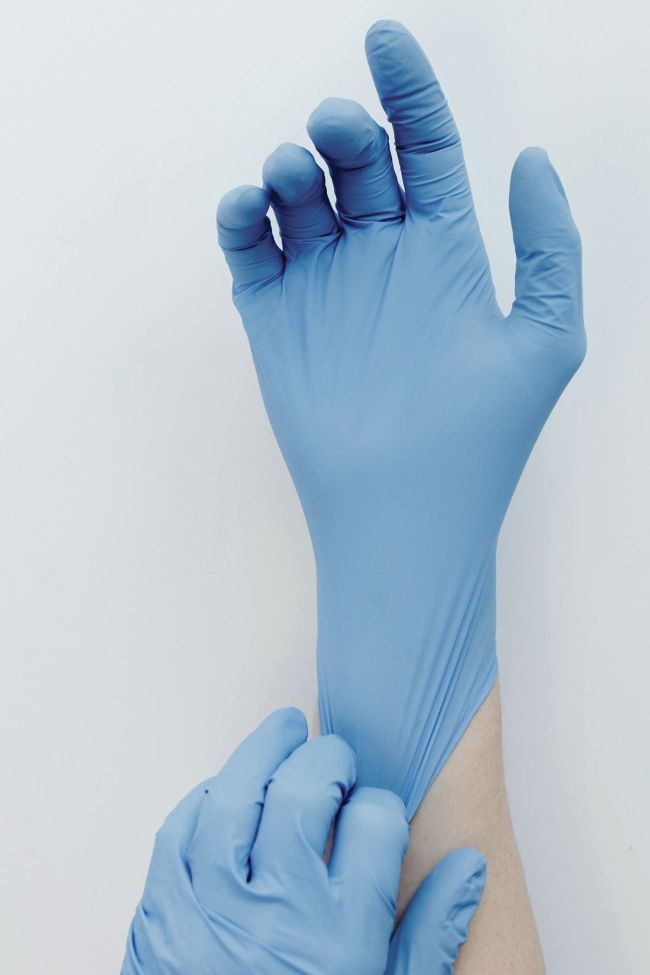
Why the right gloves are non-negotiable
“For professional nail services, gloves may not be mandatory, but their importance is becoming impossible to ignore – and therefore they are strongly recommended,” explains salon safety expert & industry veteran, Marian Newman BEM. “The reason lies in the nature of professional nail products. From UV gels to liquid & powder Marian Newman BEM systems, nail coatings are chemically complex and often contain substances that can affect the skin. Most nail coatings contain allergens, and products such as alcohols and solvents – like acetone, are irritants.” Although allergens and irritants behave differently, both can lead to discomfort and long-term issues if exposure is repeated.
Sources of exposure are not always obvious. Contact can occur from filing dust – especially from undercured coatings, volatile product vapours and routine cleaning. “Handling bottles that are not clean or removing tacky layers with soaked pads can even contribute to cumulative exposure over time. Because of this, glove use is a simple yet powerful protective measure,” Marian states.
“However, not all gloves offer the same level of safety. Material choice is key, and as many individuals are sensitive to latex, nitrile is recommended,” she continues. “Thickness also plays an important role. Plastic sheeting is measured in ‘mils’ and a minimum of six mils is recommended for nail technician gloves. For those seeking the highest level of protection, additional measures are advised. The British Association of Dermatologists recommends double gloving and changing gloves every 30 minutes or less.
“Adopting gloves as part of daily practice may take some adjustment, but it’s a habit worth building. If you would like a long and safe nail career, exposure to allergens and irritations must be minimised,” Marian concludes.
‘‘ The simple act of wearing the right gloves protects both technicians and their clients, and can make a significant difference to long-term health, hygiene and service quality. "
NITRILE GLOVES: what you need to know
“When it comes to glove materials, not all are created equal and nitrile gloves are the best option for everyday
practice,” shares
Vitaly Solomonov
Vitaly Solomonov, nail industry expert & competition judge. “Unlike latex, nitrile offers strong resistance to a variety of microbes, including viruses such as COVID-19, hepatitis and potentially harmful chemicals. It also eliminates the risk of latex allergies, is widely accessible and cost-effective.
“Thickness plays a critical role. Most gloves come in thicknesses of four, six or eight mils. However, nitrile gloves can let some substances pass through and eventually reach the skin. This is a crucial point that many technicians overlook: even high-quality gloves are not completely impermeable.”
Vitaly continues: “Wearing gloves is only effective if they’re used correctly. One of the most common mistakes nail techs make is wearing them for too long, as prolonged use can weaken the glove material and increase the risk of cross-contamination. Protection is essential for nail professionals – not just to avoid immediate contamination, but to prevent long-term health risks.”
While offering excellent protection, Vitaly shares that pros should be aware of a downside to nitrile gloves. “They come with an environmental drawback: they are not recyclable,” he says. “If contaminated, it is highly recommended to dispose of nitrile gloves inside out to avoid contamination spread.”
Debunking glove misconceptions
“Gloves serve two key purposes within the nail industry: protection against biological hazards such as viruses and bacteria, and protection against chemical exposure,” comments Katie Clark, award-winning nail pro & founder of Katie Barnes Tool Range & Education. “It’s important to reframe how we think about chemicals in the nail industry, Katie Clark as even water can be seen as a chemical. Chemicals are not inherently harmful, but they become a risk when they are misused, poorly stored or when appropriate PPE is not worn.
“One of the biggest misconceptions about gloves is that they all offer the same level of protection. In reality, every glove is designed for a specific purpose, and it would be impossible to create a glove that protects against every chemical. Nail techs need to select gloves based on the chemicals they work with or those they may be sensitive to.” Katie continues: “A critical concept that is often overlooked is breakthrough time: the amount of time it takes for a chemical to pass through glove material after initial contact. Breakthrough is invisible; just because a glove looks intact does not mean it’s protecting you. Gloves must be changed before breakthrough is reached, and as different chemicals have different breakthrough times, best practice is to work to the shortest one.
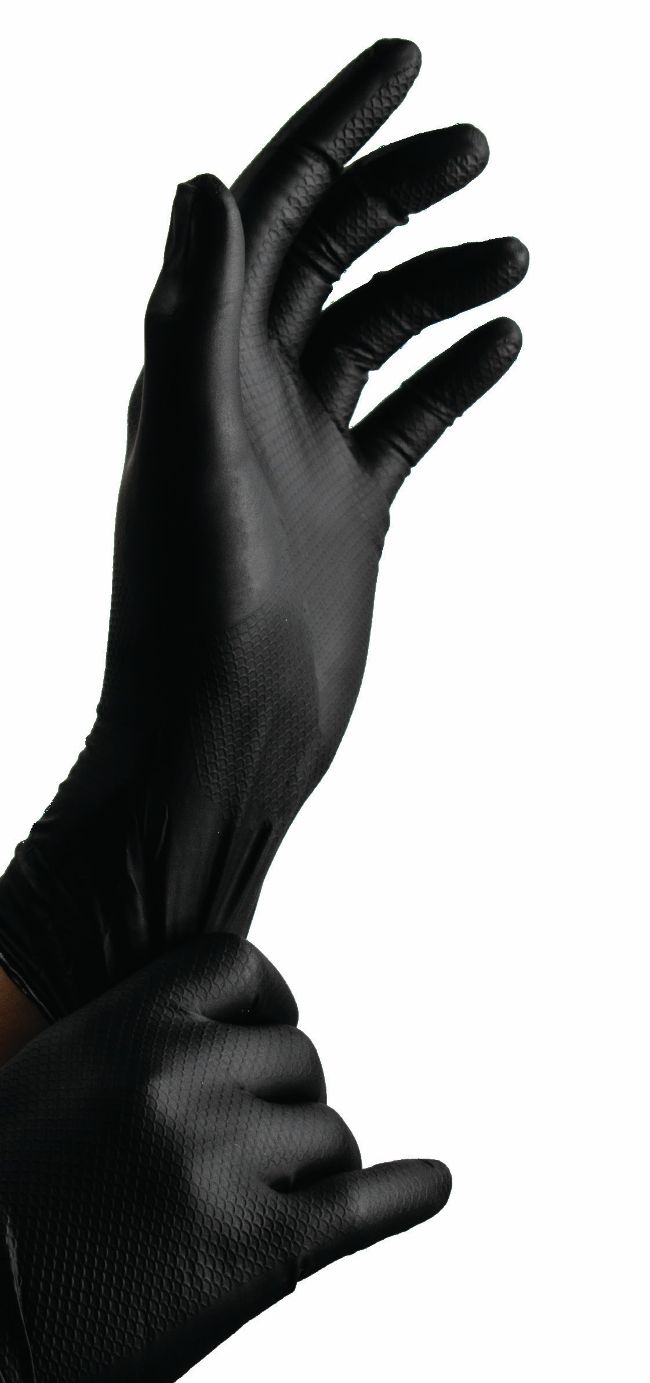
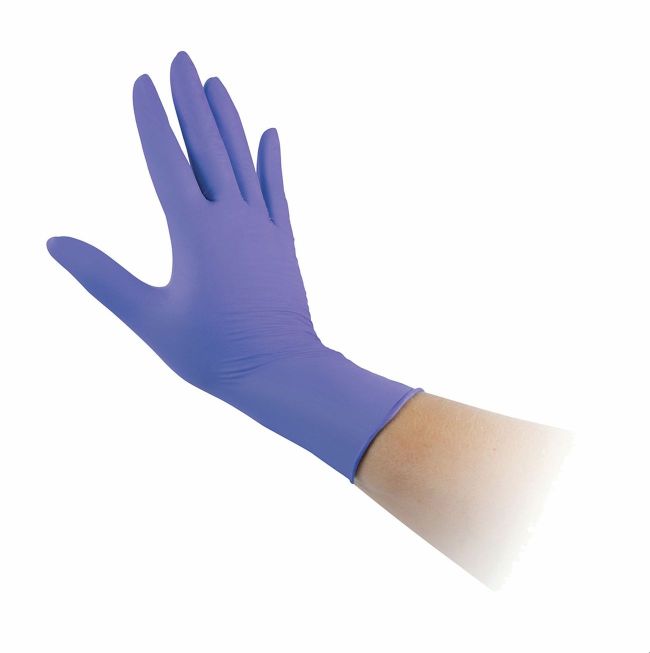
“Nitrile gloves are the nail industry standard, and some insurance providers specifically require their use,” Katie tells Scratch. “Nitrile allergies are extremely rare and in cases where techs experience irritation, it’s far more likely to be caused by chemical breakthrough. Gloves are essential, but they are not failproof. For example, very few nitrile gloves offer true resistance to acetone as while it’s not an allergen, it’s a strong irritant. The safest approach is to use a barrier cream and change gloves immediately after acetone use.”
Touching on the environmental considerations of gloves, Katie adds: “Sustainability is a growing concern within the nail industry, and gloves are part of that conversation. However, through extensive research, it’s clear that glove recyclability is limited. Once used, gloves are contaminated with chemicals, dust and biological matter, which means they cannot be recycled through standard systems.”
Glove recommendation
OPI recommends that its customers wear the DG-Maxim Nitrile Disposable Gloves, available via Katie Barnes Tool Range. A spokesperson for the OPI education team comments: “We always use gloves in our demonstrations and teach that wearing gloves is a simple yet essential step in protecting nail professionals from repeated contact with uncured product. Preventing overexposure helps support long-term skin health and minimises the risk of sensitivity, allowing nail techs to work safely and confidently. We love using these nitrile gloves, and encourage our customers to do the same.”
DG-Maxim Nitrile Gloves – Small (box of 50) £16.99 inc VAT www.katiebarnesacademy.com
Nitrile Gloves in Indigo – Large (box of 100) £9.95 + VAT www.sweetsquared.com
‘‘ Education is key – understanding chemical exposure and knowing when to change gloves is what truly protects nail professionals. ‘‘
Katie Clark
76 SCRATCHMAGAZINE.CO.UK
‘‘ Gloves not only protect nail technicians’ skin, but support hygiene standards and reassure clients that you’re working cleanly and professionally. ‘‘
Brand perspective
“The GelBottle Inc team promotes the use of high-quality nitrile gloves,” states Emma-Jane Heir, educator for the brand. “Nitrile offers a second skin fit and superior chemical resistance, to protect against exposure to dust and uncured product. Without protection, these substances can lead to cumulative irritation or, in some cases, allergies.
Emma-Jane Heir
“However, a common pitfall among nail pros is the invincibility complex: many don’t realise that wearing gloves doesn’t mean that product isn’t able to penetrate – or be transferred to clients’ skin or your workplace,” Emma-Jane continues. “If you touch uncured product with your glove, you must change it immediately to prevent transference. We recommend a fresh pair of gloves for every client, and a mid-service change if you notice any tearing or heavy dust accumulation.
“A professional nail environment, hygiene and chemical safety are non-negotiable,” the educator affirms.
The GelBottle Inc ProTech Gloves – box of 50 (small, medium & large sizes) £12.95 + VAT www.thegelbottle.com
Tech talk
“Gloves are an essential part of nail work – for both protection and professionalism,”
Hayley Shepley shares
Hayley Shepley, award-winning educator & advocate for the NSI and Roxi brands. “At the start of my career, I didn’t consistently wear them and over time, I developed contact dermatitis due to repeated exposure to products and dust. Since then, gloves have become non-negotiable for me.
“The importance of gloves shouldn’t be underestimated,” Hayley continues. “Well-fitting, durable gloves allow you to work confidently – without compromising on safety or performance. Gloves not only protect nail technicians’ skin, but support hygiene standards and reassure clients that you’re working cleanly and professionally.”