To go mobile or not to go mobile? That is the question – and for a growing number of nail technicians, the answer is a resounding yes. Trading the expenses of a traditional salon setup for the open road is an attractive proposition for many.
Whether you’re a newly qualified nail tech weighing up your options, or an industry veteran seeking to change direction, take our quiz to see if the mobile model is suited to you – then immerse in expert insight on how to reap its rewards.
Is a mobile nail business right for you? Find out by answering the following questions:
1
How
do you feel about working alone? a) I thrive independently. Go to Q2 b) I prefer working with others. Working solo might not be the best fit for you. Consider renting a chair in a salon, as you can work on a self-employed basis but be surrounded by peers.
2
Do
you have – or are you working towards – a full driving licence? a) Yes. Go to Q3 b) No. The ability to drive to clients is often key for mobile nail techs. If transport is an issue, a home salon may be a more practical option.
3 How do you feel about self-promotion and marketing your business? a) I’m comfortable putting myself out there. Go to Q4 b) The idea fills me with dread. Promoting yourself on social media is crucial to attract mobile nail clients, and ensure they feel comfortable allowing you into their homes. If that isn’t something you want to do, a salon role may be better suited.
4
Are
you comfortable managing your finances, tax and admin? a) Yes, or I’m willing to learn. Go to Q5 b) I just want to do nails; the business side doesn’t interest me. When it comes to running a mobile business, admin is unavoidable. If the thought of it is off-putting, factor the cost of an accountant into your business plan, or consider employed salon work where this is handled for you.
5
Do
you have a budget available for a vehicle, mobile kit and insurance? a) Yes. Go to Q6 b) No, and I can’t access that right now. Though launching a mobile business may not be viable currently, that doesn’t mean it never will be. Take some time to explore funding options and come back to this quiz when you’re ready.
6
How
important is work-life balance to you? a) Very important – it’s one of the main reasons I’m considering going mobile. A mobile nail business is an excellent fit for you. Freedom to adjust to your lifestyle is a key quality. Read on to find out how to get started. b) I don’t mind long or unpredictable hours, I just want to maximise earnings. The mobile model can work for you, but it’s worth considering your boundaries before starting. Consider a realistic client location radius and set a clear schedule.
LEGAL LESSONS
Just as with any business, there are legal requirements that must be dealt with before you can begin working. These are designed to protect you and your clients – and putting them in place from the start will save you considerable stress down the line.
Licensing
You will need:
• A nail qualification. “You need to be properly qualified,” says Scratch Stars Ultimate Mobile Nailist, Clare Woodcock. “Training with a reputable nail educator or brand is hugely important. You are running a business, not practicing a hobby.”
• A business licence. While the UK does not
Clare Woodcock require mobile beauty businesses to have a
national licence, many local authorities – particularly in London – demand that mobile business owners acquire a special treatment licence. You can find your local authority’s legal requirements and apply for any necessary licences via the Government website (www.gov.uk).
• A driving licence. Though not essential, it is highly recommended that mobile nail techs hold a full driving licence to make commuting between clients easier. “For me, this is crucial,” says
Stela Angelova, Scratch Stars Mobile Nailist of the Year 2024. “Being a mobile nail technician without a driving licence would be very difficult.”
• To register as self-employed. Working as a mobile nail technician in the UK requires you to pay taxes via Self Assessment. To do this, you must register as a self-employed trader with HMRC via www.gov.uk.

Stela Angelova

Jade Thornhill
Insurance
Jade Thornhill, Scratch Stars Mobile Nailist of the Year finalist 2024-2026, advises: “You should have public liability insurance. Not only is this a legal requirement that protects you and your clients, but it demonstrates professionalism.”

Gemma Riley
“People often forget to check that their car insurance includes both personal and business use, so make sure you are fully covered,” adds Gemma Riley, Scratch Stars Mobile Nailist of the Year finalist 2025 & 2026. Clare Woodcock agrees, adding: “Ensure that your car insurance covers kit loss too.”
UK and Ireland specialist insurance company, Associated Beauty Therapists (ABT), combines robust insurance cover with practical business and industry support ‘designed to meet the realities of modern, self-employed nail professionals’.
“As the number of mobile nail technicians across the UK continues to grow, ABT’s insurance policy has been structured to reflect the unique risks and working practices of professionals who operate outside a fixed salon environment,” explains

Amelia Black
Amelia Black, ABT’s brand manager. “The policy offers a high level of cover specifically for mobile nail technicians, providing peace of mind whether treatments are carried out in clients’ homes, temporary venues or rented spaces.” Find out more at www.abtinsurance.co.uk
PRACTICAL POINTERS
From budgeting basics and vehicle choices to must-have equipment and hygiene essentials, there are a number of practical considerations to note before launching a mobile nail business.
Invest to impress
UK beauty wholesaler, SalonServe, estimates that, while startup costs ‘depend on your chosen business model and service range’, a mobile nail tech setup can cost £800-£2,500. However, expenses can differ depending on factors including whether quality training is needed, so ensuring you have sufficient funds is essential when starting out.
You need to be able to cover costs including licensing, insurance, nail supplies, transport, fuel and any paid marketing – as well as a financial buffer for quieter periods while you build your client base.

Sonia Massei
Sonia Massei, Scratch Stars Mobile Nailist of the Year finalist 2026, recommends: “Before going mobile, make sure you have savings you are prepared to use on your business. Uncertain times do happen and every business has quiet phases, so you must be ready for that.”
Road ready
The make and model of your business vehicle should be based on practicality and personal preference. “I drive my family car,” says Jade Thornhill. “I have a SUV, so the boot is a good size for my kit. However, depending on your supplies, a smaller car might be more economical.”
Gemma Riley adds: “Your car should be reliable and have enough room to store your products. You’ll probably spend a lot of time driving, so comfort and practicality matter.”
It is important to consider how far you are willing to travel, as this dictates how much of your working day is spent behind the wheel. “I work within a limited radius of my home,” Gemma reveals. “I have found that keeping my client base fairly local is beneficial.”
Stela Angelova concurs, revealing: “I travel no more than five miles or 15 minutes from my home. This means I can fit in my target number of appointments each working day.”
, Scratch Stars Mobile Nailist of the Year finalist 2026, advises: “Keep your treatment offering refined and choose products and systems that travel well. Though a luxury service with a steamer, hot towels and orange slices might Amy Hide not be achievable, you can still carry add-on items. I take a small selection of high-end hand creams and under-eye patches to create luxury pamper sessions.”

Amy Hide
Tools of the trade
Aside from skill, a good nail kit is imperative to a successful nail business. Reliable tools and high-quality products will allow for more efficient services and superior results.
“Build a kit of products and equipment that suits the client experience you want to offer,” says Jade Thornhill. “For example, I aim to create a luxury experience, so I bring a portable nail desk, rather than setting up on clients’ kitchen tables.”
Clare Woodcock shares: “Be prepared to invest in a high-quality kit, so you don’t have to replace items often.” Her mobile nail kit recommendations include:
1. Product trolley: “I’ve had my ZÜCA Sport Artist Trolley for six years, and it’s still going strong.”
2. Kit bags: “I use different kit bags for different services. For example, I have one dedicated to my pedicure products, and a large tote bag for foldable stools.”
3. Protective table mats: “If you’re working from a client’s home, you don’t want to spill acetone, IPA or gel polish on their furniture.” 4. Lighting: “You should never rely on clients’ home lighting. Instead, invest in durable, portable lamps from brands such as The Daylight Company.”
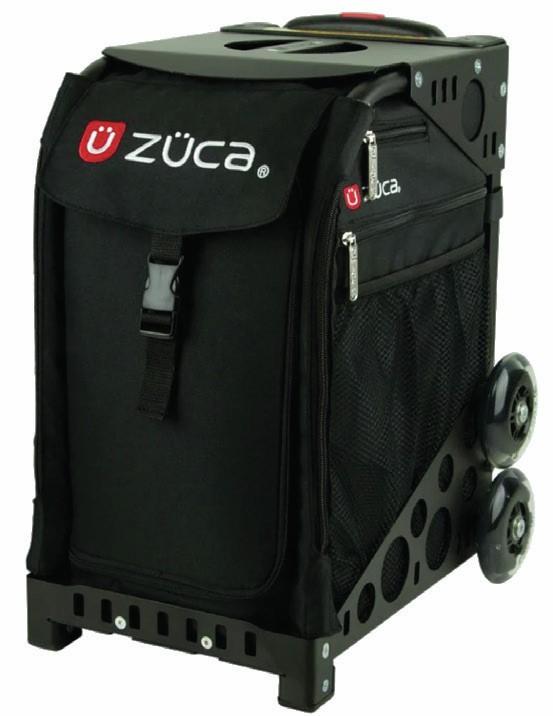
ZÜCA Sport Artist – Obsidian Makeup Trolley in Black £POA
www.zuca-europe.com
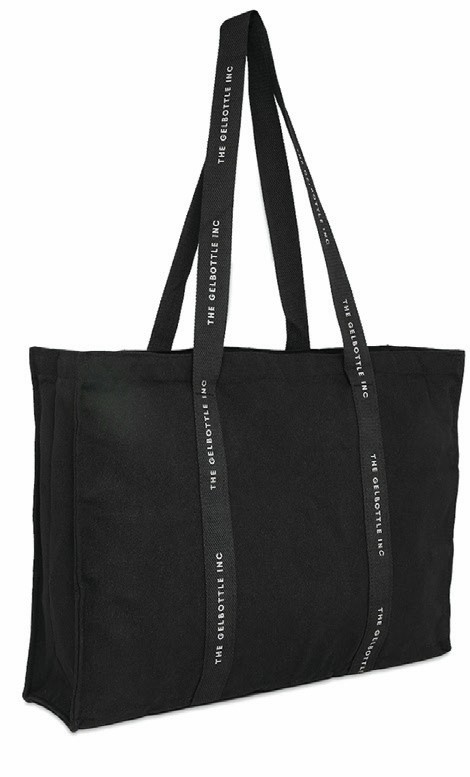
The GelBottle Inc Canvas Tote Bag £24.99 + VAT
www.thegelbottle.com
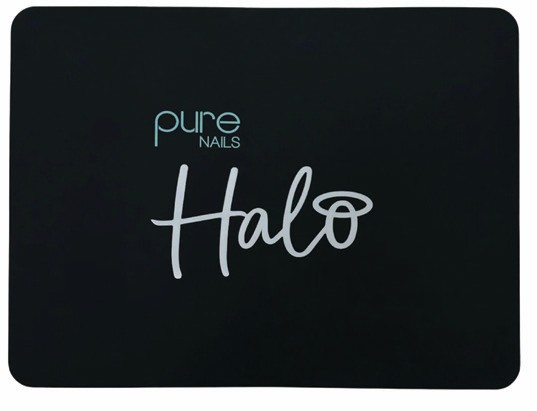
Halo Desk Mat £6.35 + VAT
www.purenails.co.uk
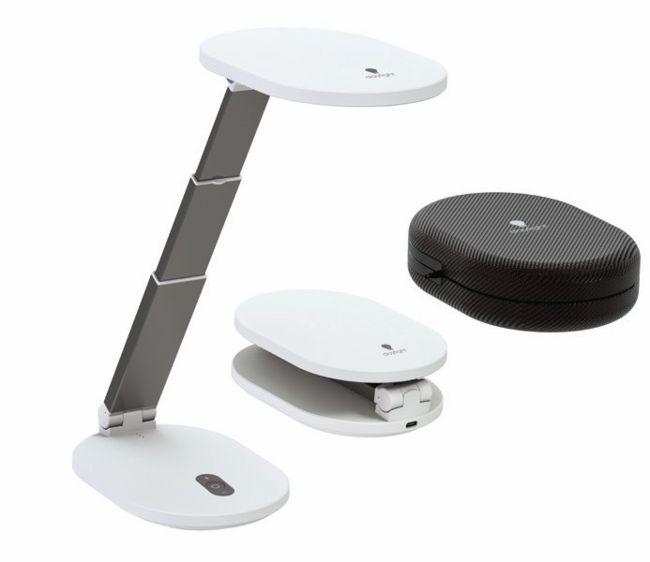
The Daylight Company Foldi Go Lamp £99.99 inc VAT
www.thedaylightcompany.com
Scratch Stars Mobile Nailist of the Year finalist 2026, Gergana Yozova, adds that she ‘focuses on having a well-organised system’, featuring portable equipment and storage solutions that make travelling easier. “These allow me to work efficiently in any environment, while still delivering high-quality results,” she comments.

Gergana Yozova
Squeaky-clean standards
Health & safety is of paramount importance when it comes to nail services, and the on-the-go nature of mobile working may necessitate taking extra measures.
“You need multiple sets of nail tools,” says Stela Angelova. “Though I use disposable tools as much as possible, such as files and buffers, I carry more than one set of metal tools, so I can easily use a clean set for every client.”
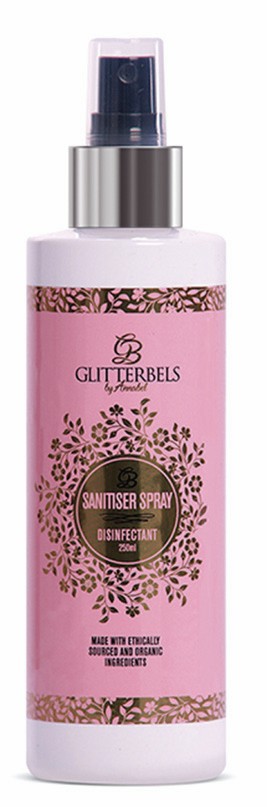
Glitterbels Sanitiser Spray £8.95 inc VAT
www.glitterbels.com
Jade Thornhill adds: “I carry bin bags for rubbish, clean dust filters for every client, and hygiene sprays and wipes. After every appointment, I spray and wipe down everything I have touched.”
Clare Woodcock chooses to supply her clients with their own packs of tools. “I give all my clients their own file, buffer and nail brush, which they keep for me to use at each appointment,” she explains. “This reduces single-use products and limits cross-contamination.”
At the end of each working day, reusable tools should be disinfected and sterilised as per industry standards and product manufacturer instructions. “I thoroughly clean my nail tools after every appointment,” says Gergana Yozova. “I disinfect them, sterilise them in an autoclave, then store them in single-use sterilisation pouches. This keeps the tools protected and clean until their next use.”
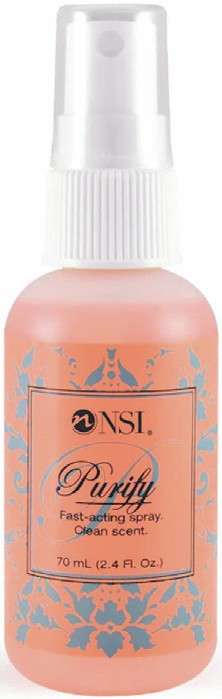
NSI Purify Fast-acting Spray from £5.25 + VAT
www.nsinails.co.uk
Extraction equipment pick
The VODEX SalonAIR® Mobile is a dust and fume extractor designed specifically for mobile nail pros, extracting dust at source and filtering it into clean air. Its more compact size, compared to the other extractors in the SalonAIR® range, and pull along bag ensure easy transportation.
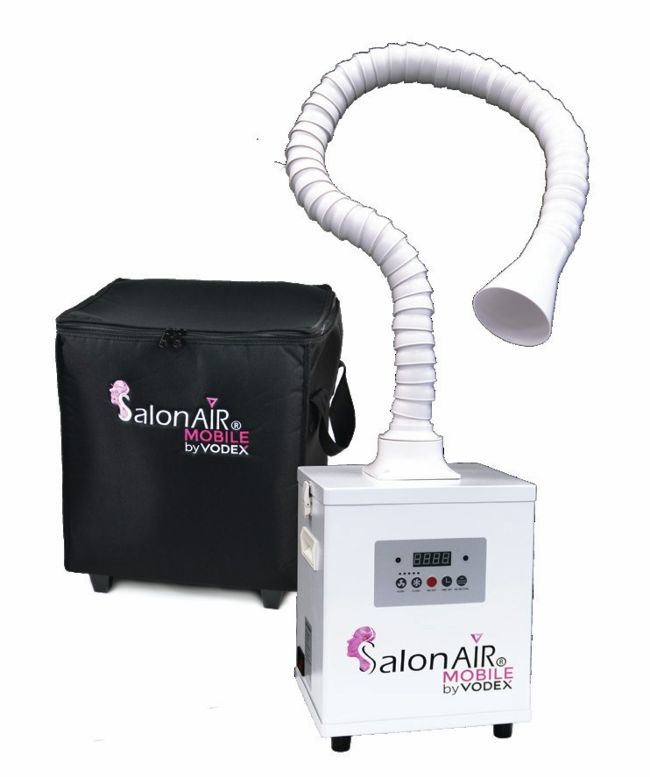
VODEX SalonAIR® Mobile from £879.60 inc VAT
www.vodex.co.uk
‘‘ If you are organised and meet high standards, the mobile model can be a really rewarding way to work. ‘‘
Gemma Riley
Book smart
“Having an online booking system is essential,” says Clare Woodcock. “My clients love that they are able to book their appointments online, without needing to have a conversation or wait for a reply from me.”
She advises: “Invest in a high-quality booking platform, like Timely, and set clear cancellation policies. Implement card capture or deposits to limit the impact of cancellations.”
Beauty booking and payments software, Timely, is used by over 30,000 global businesses, the majority of which are beauty-focused. The software aids aspects of daily management, from appointment booking, stock tracking and sending automated messages, to storing client notes, providing digital consultations and taking payments. www.gettimely.com
Stay connected
“Being a mobile nail tech offers independence, but it also means you’re on your own frequently,” details Amy Hide. “Here are my top tips for battling workplace isolation: 1. “Schedule breaks in pleasant locations, instead of in your car. Pop into a friend’s house for a coffee or take a stroll in a local park. 2. “Connect and stay in touch with other techs through social media or by attending in-person networking and education events. 3. “Work around people where possible. Have an admin afternoon in a café or members’ space. You don’t have to speak to anyone, but simply being around people’s energy can be comforting.”
MARKETING MASTERCLASS
When it comes to filling your schedule, knowing how to sell your services is key. “Word of mouth is really powerful,” says Clare Woodcock. “Having an online presence is also essential, alongside client reviews.”
Stela Angelova highly recommends Facebook as a place to build client connections. “I believe it’s the most powerful tool for nail businesses,” she notes. “I grew my client base mainly through Facebook, where marketing didn’t cost me anything, and now my schedule is full two months in advance.”
It’s crucial that you don’t stop marketing your services when you have secured appointments. “Once clients have booked, it’s important to show them that you really care about their nails,” Stela shares. “Excellent skills and attention to detail breed loyalty.”
Gergana Yozova promotes her nail business in an innovative way, and shares: “I have branded stickers on my car. These include my phone number and the services I offer, and help people notice my business when I’m out and about.”
The price is right
Charging your worth is key to creating a sustainable mobile nail business. Though the overheads of rent, staff wages and utility bills may not apply, fuel costs, equipment replacement, vehicle upkeep and parking fees can eat away at your profit margins.
“Mobile nail techs are convenient, but that does not mean we just offer in-and-out services,” notes Jade Thornhill. “A mobile nail appointment is a luxury and should be priced accordingly.”
“When I first started as a mobile nail tech, I found it difficult to price my treatments, so I decided to take a one-day pricing course,” says Gergana Yozova. “I was advised to review and update my prices every six to eight months.”
Clare Woodcock shares her four-step guide to charging your worth: 1. “Work out rough product costs for each nail treatment you offer, and add on the price of the percentage of consumables you use in a service, such as lint-free wipes, foil, acetone and nail files. If you offer nail art, you’ll need to charge extra for this, so consider pricing in time frames. 2. “Factor in equipment costs, making sure you work out how long these items will last before you need to replace them. You must also include your fixed costs: those you incur to run your business, regardless of how many clients you have. Don’t forget to incorporate travel costs. 3. “Decide how much you are going to pay yourself per hour. Remember, you are a professional with qualifications and a valuable skillset. Ensure you aren’t just charging for the time it takes you to perform a service; include the time it takes to travel to clients. 4. “Put a spreadsheet together or invest in a pricing calculator that can take these costs into consideration.”
Amy Hide suggests: “Once you’ve determined your desired hourly rate, remember that this is just a starting point. Consider implementing the following:
• “Minimum charge: a minimum cost within a specific radius.
• “Travel fee: a charge based on distance or time travelled.
• “Location-based costs: different pricing zones based on location.”