ALYA SIMOUN
New York-based nail artist & session manicurist www.alyasimoun.com
@crazy4clawz
Domestic Violence Awareness Month: ALYA’S STORY
T hey say beauty is pain. As a woman, I’ve heard some version of that my whole life. As a nail artist, I’ve spent years showcasing this with unconventional, often extreme, always intentional work: three-inch nails, hand-sculpted charms, metallic and textural styles. Designs that make people stop and look twice. But I never expected my nails to become something else entirely: survival.
I’m Alya, the nail artist behind Crazy4Clawz. My work has appeared in WWD, Rolling Stone, Complex and Playboy, and I’ve built a career around making nails that take up space. In a world where women are often taught to shrink and soften, long nails are quickly read as aggressive – and even weaponised. They communicate confidence, power and a willingness to occupy space.
Despite what my nails seemed to portray, I spent years making myself small and soft. Enveloped in an abusive relationship, I learned to shrink, accommodate, conceal and ignore my instincts. Then,
I nearly lost my life at the hands of my abuser, and my nails were my only form of defence. Three-inch long, sharp and bedazzled nails – made simply because I loved the artistry of them – became the reason I survived.
October is Domestic Violence Awareness Month: a time to honour survival, name the risks too many people live with and reclaim power in small but profound ways. For me, it’s also about the inextricable relationship between my art and survival – my nails as a witness and weapon, and the slow work of healing.
Injured and in shock after defending myself, the first thing I noticed was my nails. Broken and blood-stained, they were no longer the elaborate pieces of art I’d spent so much time creating – but they were proof.
Months later, those broken nails became part of my testimony. Photographs of them were projected onto a courtroom wall as I testified against my abuser. There was something surreal about watching my art become evidence. For years, my nails had been photographed for clients, campaigns and my portfolio. Now, the photos were documenting something else: proof of what I endured, even when my mind tried to erase it.
For a long time, I thought beauty was something I created for other people. Today, I understand it differently. Beauty can be a way of taking something back, and making art with the same hands that once had to fight to survive. My nails are no longer just an aesthetic choice; they’re a reminder that my hands, body and life belong to me.
Thousands of lives are taken by domestic violence every year, and leaving is often when you’re most at risk. Most domestic violence homicides happen after someone leaves, and most survivors return an average of seven times before they’re able to stay away for good. The cycles of control, fear and love are complicated, and escaping them isn’t as simple as walking away.
"They say beauty is pain, but I’ve learned that beauty can also be power. And sometimes, beauty can save your life. "
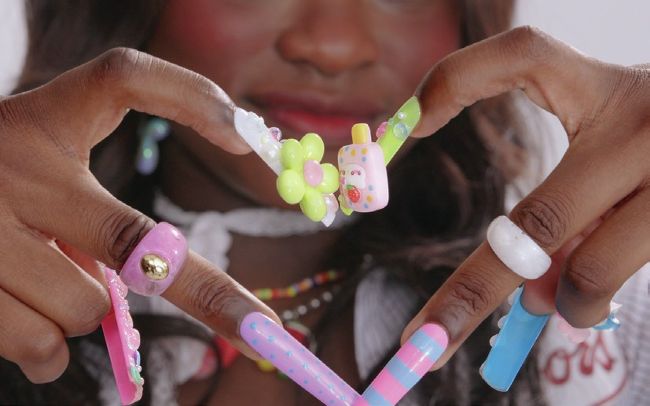
Image courtesy of Danni Velasquez-Mora
I’m now familiar with these cycles in ways I never expected to be. I also know that survival doesn’t always look how people expect. Sometimes, it looks like part of your beauty routine; so ingrained it feels like part of you – armour you built before you knew you’d need it.
So here’s to healing loudly and unapologetically, even when every instinct says to be silent. Here’s to taking up space in aesthetic choices and beyond, and slowly learning to trust the hands that saved you.
They say beauty is pain, but I’ve learned that beauty can also be power. And sometimes, beauty can save your life.
If you or someone you know is experiencing domestic violence, the National Domestic Violence Hotline in the United States offers confidential support 24/7. Call 1-800-799-7233 or text ‘START’ to 88788. In the UK, the National Domestic Abuse Helpline is 0808 2000 247.